


Let me guess – you’re standing at the crossroads of a classic mycology decision, wondering whether to invest in spore prints or syringes. I’ve been there, trust me. After years of peering through microscopes and handling countless specimens, I can tell you that this choice has sparked more debates in mycology forums than almost any other topic. And honestly? There’s a good reason for that.
The truth is, both spore prints and spore syringes have earned their spots on the lab bench. Whether you’re just getting your feet wet in microscopy or you’ve been cataloging specimens since the dawn of time, understanding these two formats inside and out will save you headaches, money, and maybe even a few contaminated samples. So let’s break this down properly.
Spore Prints vs Syringes: What Are We Really Talking About?
Before we dive into the nitty-gritty comparison, let’s make sure we’re on the same page about what these formats actually are. You’d be surprised how many people mix up the basics.
Spore Prints: Nature’s Time Capsule
Picture this: you place a fresh mushroom cap on a piece of foil, cover it with a bowl, and wait. Hours later, you lift that cap to reveal millions of spores arranged in a perfect pattern – that’s a spore print. It’s like capturing a mushroom’s signature, preserved in its most natural state.
What makes prints special is their simplicity. No additives, no preservatives, just pure spores doing what they do naturally – falling from the gills and creating art. Here’s what you’re working with:
- Billions of spores packed into a concentrated deposit (we’re talking serious genetic material here)
- Usually collected on aluminum foil, though some folks prefer paper or glass
- Colors that range from deep purple-brown to rust orange, depending on the species
- Storage that’s as simple as sliding them into an envelope – no fancy equipment needed
- A collection method that mushrooms have been using for millions of years
Spore Syringes: The Modern Solution
Now, spore syringes are a different beast altogether. Imagine taking those spores and suspending them in sterile water, creating a solution that’s ready to go at a moment’s notice. Each 10ml syringe is basically a microscopy session waiting to happen.
These aren’t your average medical syringes – they’re precision tools designed specifically for spore work:
- Millions of spores swimming in distilled, sterile water
- Medical-grade syringes that maintain sterility until you’re ready to use them
- Sterile needles that let you place exactly the right amount on your slide
- Pre-hydrated spores that are immediately observable – no prep work required
- Consistent 10-12ml volumes that provide dozens of microscopy sessions
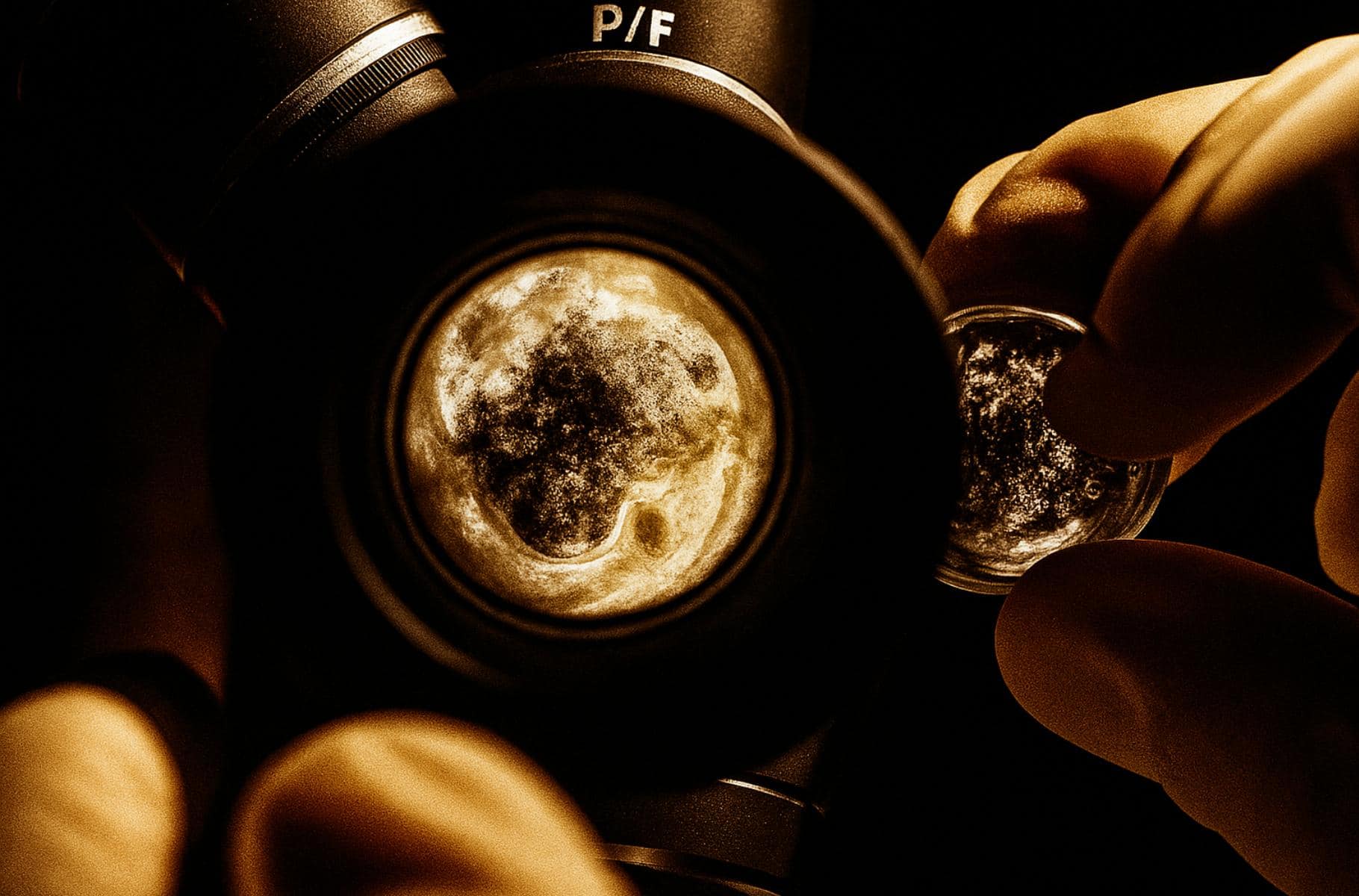
Now for the Real Talk: How Do They Stack Up?
Alright, let’s get into what you really want to know. How do these formats compare when it comes to the stuff that matters? I’ll break it down based on what I’ve learned through trial, error, and more than a few “learning experiences.”
The Longevity Game: Who Wins the Marathon?
If you’re thinking long-term (and I mean really long-term), prints take the crown without question. The American Phytopathological Society has documented fungal spores remaining viable for decades, and I’ve personally worked with prints that were over 15 years old.
Why prints last so long: It’s all about that moisture-free environment. Without water, there’s nothing for bacteria to grow in, no medium for degradation. I’ve got prints from 2010 sitting in my filing cabinet that still produce beautiful slides today. Just keep them cool, dark, and dry – your future self will thank you. Some hardcore collectors even freeze their most precious prints, though honestly, a simple envelope in a drawer does the trick for most of us.
The syringe situation: Here’s where things get tricky. That same water that makes syringes so convenient? It’s also their Achilles’ heel. Even in the fridge, you’re looking at 6-12 months of prime viability, maybe stretching to 2 years if you’re lucky and the mycology gods smile upon you. I’ve learned this the hard way – nothing worse than pulling out a syringe you’ve been saving, only to find it’s turned into bacterial soup.
User-Friendliness: The Learning Curve Reality
Look, I’ll be straight with you – if you’re just starting out, syringes are your best friend. There’s no shame in taking the easy route when you’re learning the ropes.
Why syringes rock for beginners: Pop the cap, squeeze a drop onto your slide, and boom – you’re doing microscopy. No sterile technique to master, no equipment to buy, no wondering if you’re doing it right. It’s like the difference between making instant coffee and grinding your own beans – both get you caffeine, but one requires a lot less morning brain power.
The print learning curve: Working with prints is an art form. You need sterile water, a clean workspace (hello, still air box), and the patience to learn proper technique. The first time I tried to rehydrate a print, I ended up with clumps of spores that looked like microscopic asteroids. It takes practice, but once you nail it, you’ll feel like a proper scientist.
The Contamination Conundrum
Ah, contamination – the unwelcome guest at every mycology party. Both formats have their vulnerabilities, just in different ways.
According to sterile technique protocols from Carolina Biological Supply, contamination is always lurking. Here’s the real deal:
Prints play the long game: Stored dry, prints laugh in the face of contamination. No moisture means no party for bacteria or mold. But the moment you crack open that foil to make a syringe? That’s when things get dicey. One lapse in sterile technique and you’ve got a science experiment you didn’t sign up for.
Syringes face the ticking clock: Even sealed and refrigerated, that aqueous environment is like a slow-motion petri dish. I’ve seen perfectly good syringes go bad after six months, developing that telltale cloudiness that means game over. But here’s the silver lining – when they’re fresh, syringes are much easier to use without introducing new contaminants. It’s a trade-off.
Following the Money: What’s the Best Bang for Your Buck?
Let’s talk dollars and sense (pun intended). Your wallet will thank you for understanding the economics here.
Print economics are pretty wild: Drop $15-30 on a good print, and you’re potentially sitting on enough material to make 50+ syringes. I once calculated that a single B+ print I bought for $20 yielded enough spores for about 75 syringes – that’s roughly $1,500 worth at retail prices. Of course, you need to factor in supplies and time, but still, the value proposition is insane.
Syringes offer convenience pricing: At $15-25 per pop, you’re paying for someone else to do the work. And honestly? Sometimes that’s worth it. Each syringe gives you 50-100 slides worth of material with zero prep time. For casual microscopists or those trying different strains, it’s money well spent.
Research Applications: Different Tools for Different Jobs
Here’s something that took me years to fully appreciate – prints and syringes aren’t just different storage methods, they open up different research possibilities.
With prints, you’re holding a genetic goldmine. That abundance of spores means you can experiment, share with fellow researchers, mess up a few times, and still have material left over. I’ve used single prints for everything from teaching workshops to long-term viability studies. They’re perfect when you need flexibility and quantity.
Syringes shine when consistency and convenience matter. Running a comparison study? Teaching a class? Need quick results for identification? Syringes deliver every time. The standardized format means everyone’s working with the same concentration, which is huge for reproducible results.
So Spore Prints vs Syringes – Which Should You Choose?
After all this comparison, you’re probably wondering, “Okay, but what should I actually buy?” Here’s my honest take based on different scenarios.
Team Spore Print If You’re:
- Planning to stick with this hobby for the long haul (we’re talking years, not months)
- Someone who likes getting their hands dirty and learning techniques
- Building a reference collection or library of specimens
- On a budget but willing to invest time and effort
- Interested in sharing or trading with other enthusiasts
- Already comfortable with aseptic techniques from other hobbies
- The type who reads equipment manuals for fun (you know who you are)
Team Spore Syringe If You’re:
- Just dipping your toes into microscopy waters
- Looking for specific strains to study right now
- Working in a classroom or demonstration setting
- More interested in observation than preparation
- Limited on storage space or equipment
- Someone who values their time over saving money
- Wanting to sample multiple strains without commitment
Why Not Both? The Hybrid Strategy
Here’s a secret – most serious hobbyists don’t choose one or the other. They use both, strategically. Start with something like the Beginner Mixpack to explore different strains via syringes. Find your favorites, then invest in prints for long-term study. It’s like dating before marriage – smart and practical.
Storage Secrets: Keep Your Investment Fresh
Whatever route you choose, proper storage is non-negotiable. I’ve seen too many good specimens ruined by careless storage.

Keeping Prints Print-Perfect
The Kew Royal Botanic Gardens has been storing fungal specimens for over a century, so they know a thing or two. Here’s what works:
- Airtight containers are your friend – add silica gel packets for extra insurance
- Double-bag it: foil packet inside a zip-lock keeps moisture at bay
- Label everything – future you will be grateful when you can’t remember what that mystery print is
- Room temperature is fine, but cooler is better (60-70°F is ideal)
- Going for the long haul? Vacuum seal and freeze at -20°C
- Check on them occasionally – prints are low maintenance, not no maintenance
Syringe Storage That Actually Works
Syringes are pickier about their living conditions:
- Straight to the fridge (35-46°F) – no detours, no delays
- Store them standing up to prevent the needle from clogging
- Original packaging is there for a reason – use it
- Never, ever freeze them (learned this one the hard way)
- Mark your calendar – use within 6 months for best results
- Let them warm to room temp before use – cold shocked spores are sad spores
Level Up: Making Your Own Syringes
Once you’re comfortable with both formats, making syringes from prints becomes a game-changer. It’s like learning to cook instead of ordering takeout – more work, but so much more satisfying (and economical).
The basic process isn’t rocket science, but it does require attention to detail:
- Set up your workspace – a still air box is your new best friend
- Boil or pressure cook water until it’s properly sterilized
- Carefully scrape spores into your sterile water
- Draw the mixture into sterile syringes
- Let those spores wake up and hydrate for 24 hours before microscopy
Do the math – that $20 print just became $200+ worth of syringes. Not bad for an afternoon’s work, right?
Species-Specific Quirks: Not All Spores Are Created Equal
Different mushroom species have their own storage personalities. Understanding these quirks helps you make smarter choices.
Sacred Strains (Psilocybe cubensis)
For microscopy and taxonomy research only – not for cultivation
These varieties generally produce abundant spores that work well in either format:
- Golden Teacher – The overachiever that produces massive prints
- Penis Envy – Stingy with spores, so syringes maximize what you get
- Enigma – The weird kid that needs special handling no matter what
Gourmet Species: Different Rules Apply
Edible varieties often march to their own drum:
- Oyster mushrooms produce delicate spores that prefer the syringe life
- Lion’s Mane spores are drama queens with super short viability – skip straight to liquid cultures
- Shiitake prints are marathon runners – they’ll outlast your interest in them
Rookie Mistakes: Learn from My Pain
I’ve made every mistake in the book, so you don’t have to. Here are the classics to avoid:
Print Predicaments
- The moisture monster: One humid day can turn your prints into expensive paper. Desiccants aren’t optional
- The butterfly effect: Spores are lighter than you think. One sneeze can redecorate your workspace
- The mystery print: “I’ll remember what this is” – Famous last words. Label everything
- Speed demon syndrome: Rushing rehydration gives you spore clumps, not suspension
- Cross-contamination chaos: Using the same tools between strains is asking for trouble
Syringe Slip-Ups
- The ice age: Freezing a syringe = expensive ice cube. Just don’t
- Shake weight: Vigorous shaking damages spores. Roll gently like you’re mixing a cocktail
- The cold shoulder: Using cold syringes shocks spores. Patience, grasshopper
- Eternal optimist: That 18-month-old syringe isn’t “probably still good”
- Denial isn’t just a river: Cloudy = contaminated. No exceptions
What’s Next? The Future of Spore Storage
The mycology world doesn’t stand still. Researchers are constantly pushing boundaries with new storage methods – cryogenic preservation, freeze-dried preparations, specialized media that extends viability. It’s exciting stuff, but for most of us, prints and syringes remain the practical choice. They’re accessible, reliable, and proven over decades of use.
The Bottom Line: Your Personal Best Choice
Here’s what it all boils down to – there’s no universal “best” choice between spore prints and syringes. There’s only what’s best for you, right now, given your goals, experience, and resources.
My advice? Start with syringes from a reputable source like Fungushead. Get comfortable with microscopy, learn what you like, make some mistakes in a low-stakes environment. Then, when you’re ready to level up, grab some prints and expand your horizons. Before you know it, you’ll have a hybrid setup that gives you the best of both worlds.
Final Thoughts: It’s Not a Competition
The great spore prints vs syringes debate misses the point – it’s not about picking a winner. Both formats have survived and thrived because they solve different problems for different people. Prints offer longevity and value for patient researchers. Syringes provide convenience and consistency for those who want results now.
The real key is quality. A contaminated print or degraded syringe helps nobody. Source from reputable suppliers, store with care, and handle with respect. These tiny spores represent entire genetic universes waiting to be explored under your lens.
Whether you’re Team Print, Team Syringe, or proudly flying both flags, welcome to the wonderful world of amateur mycology. May your slides be clean, your spores be viable, and your contamination rates be low. Happy viewing!
All spore products are intended for microscopy and taxonomy purposes only. Please research and follow all local regulations regarding possession and use of spore specimens.
