

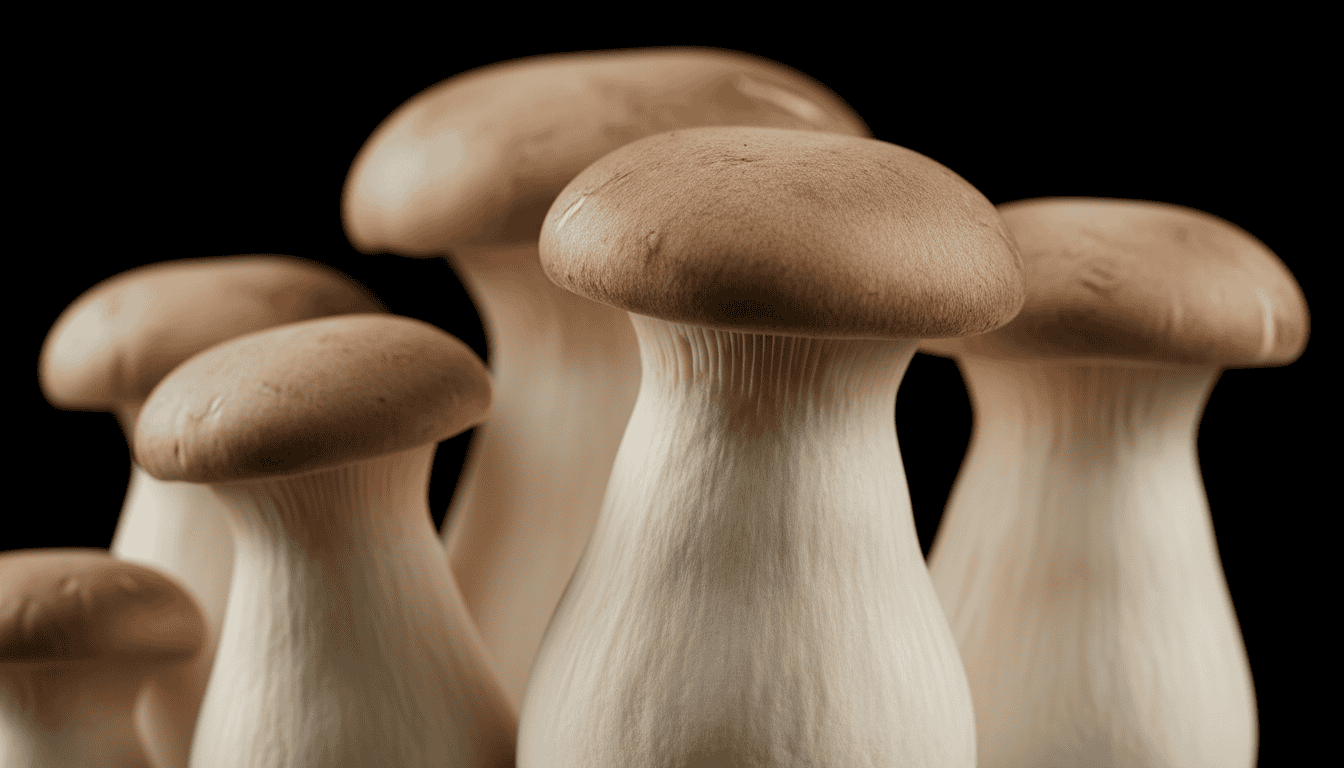
If you’re looking for a mushroom that combines incredible culinary versatility with straightforward cultivation, the king oyster mushroom deserves your attention. Known scientifically as Pleurotus eryngii, this impressive gourmet species is also called french horn mushroom, french horn mushrooms, trumpet royale, and king trumpet mushroom. It has become a favorite among home growers and professional chefs alike. Unlike its smaller oyster mushroom cousins, the king oyster boasts thick, meaty stems and a robust flavor profile that holds up beautifully to high-heat cooking methods.
Native to Mediterranean regions of Europe, the Middle East, and North Africa, king oyster mushrooms have spread across the globe due to their exceptional taste and nutritional benefits. Pleurotus eryngii is the largest species in the oyster mushroom genus. In their natural habitat, they are often found growing in association with sea holly (Eryngium) plants. They’re among the most commercially cultivated mushrooms worldwide, and for good reason. Whether you’re interested in growing them at home using liquid culture or simply want to learn more about this fascinating fungus, this guide covers everything you need to know.
What sets king oysters apart from other mushroom varieties is their unique texture. The dense, almost scallop-like consistency of their stems makes them a popular meat substitute in vegetarian and vegan cooking. At the same time, their umami-rich flavor adds depth to any dish, from simple stir-fries to complex gourmet preparations. Compared to other oyster mushrooms, which typically grow in clusters and have a more delicate structure, king oysters are distinct for their size and firm texture. When compared to other mushrooms like shiitake or maitake, king oysters offer a different growth habit and culinary versatility.
Introduction to King Oyster Mushrooms
King oyster mushrooms, also known as king trumpet mushrooms or by their scientific name Pleurotus eryngii, are a standout member of the oyster mushroom family. Prized for their dense, meaty texture and rich, savory flavor, these mushrooms have become a favorite among chefs and home cooks alike. Native to the Mediterranean regions of Europe, the Middle East, and North Africa, king oyster mushrooms are now cultivated worldwide and celebrated for their versatility in the kitchen.
What sets king oyster mushrooms apart is their impressive, thick white stems and petite tan caps, which not only make them visually striking but also perfect for a variety of cooking methods. Their firm texture holds up beautifully when pan-fried, roasted, or grilled, making them an excellent meat substitute in vegan and vegetarian recipes. Whether you’re looking to add depth to a stir-fry, create a hearty soup, or craft a plant-based main dish, king oyster mushrooms deliver a satisfying bite and a savory, umami-rich flavor that enhances any meal. Their adaptability and robust texture make them a go-to ingredient for anyone seeking to enjoy the best that the oyster mushroom genus has to offer.
King Oyster Mushroom Characteristics
Understanding the physical and biological traits of king oyster mushrooms helps you identify quality specimens and grow them successfully. These mushrooms stand out in any mushroom lineup thanks to their distinctive appearance and size. The entire mushroom, including both the dense stem and cap, is edible and commonly used in cooking, ensuring there is no waste. The fruiting bodies of king oyster mushrooms are larger and more robust than those of other cultivated oyster mushrooms.
Physical Appearance and Size
King oyster mushrooms live up to their royal name with their impressive stature. While regular oyster mushrooms typically grow in clusters with delicate, fan-shaped caps, king oysters develop individually or in small groups. The thick, cylindrical stem can reach 2 to 6 inches in length and up to 2 inches in diameter, making it the star of this mushroom.
The cap is relatively small compared to the stem, usually measuring 1 to 2 inches across. It’s typically pale brown to tan, sometimes with a slight gray tinge. The caps have a smooth, slightly velvety texture that becomes silky when cooked.
What makes king oysters particularly appealing to cultivators is their shelf life. When properly stored in a paper bag in the refrigerator, fresh king oysters can last up to two weeks, significantly longer than many other gourmet mushroom varieties.
Taxonomy and Scientific Classification
From a scientific standpoint, Pleurotus eryngii belongs to the family Pleurotaceae, part of the larger order Agaricales. The species name “eryngii” references the plant genus Eryngium, which includes sea hollies. In nature, king oysters grow on the roots of these plants, but in cultivation they thrive on supplemented sawdust or grain substrates.
Nutritional Profile and Health Benefits
Beyond their culinary appeal, king oyster mushrooms pack an impressive nutritional punch. Recent scientific research has uncovered numerous health benefits that make these mushrooms more than just a delicious addition to your plate. Thanks to their low calorie and high nutrient content, king oyster mushrooms are ideal for healthy eating and can be easily incorporated into a variety of dishes.
Macronutrients and Vitamins
King oyster mushrooms are remarkably low in calories while being high in beneficial nutrients. You can eat both the stem and cap of king oyster mushrooms, and proper preparation enhances their flavor and texture. A 100-gram serving contains approximately 40-45 calories, making them an excellent choice for calorie-conscious diets. They provide about 3-4 grams of protein per serving, which is impressive for a fungus.
The fiber content stands out particularly, with roughly 2-3 grams per 100 grams. This dietary fiber supports digestive health and helps maintain stable blood sugar levels. Research published in Frontiers in Nutrition has shown that polysaccharides extracted from king oyster mushrooms demonstrate significant hypolipidemic activity, potentially helping to lower cholesterol levels.
Protein and Fiber Content
The protein in king oyster mushrooms contains all essential amino acids, though not in optimal ratios for human nutrition. They’re particularly rich in ergothioneine, a unique amino acid with powerful antioxidant properties. The beta-glucans and other polysaccharides in the mushroom’s cell walls provide the bulk of its fiber content, contributing to feelings of satiety and supporting gut health.
Research-Backed Health Properties
Scientific studies have revealed several compelling health benefits of regular king oyster mushroom consumption. A clinical trial published on PubMed Central found that daily consumption of vitamin D2-enhanced king oyster mushrooms led to significant reductions in glucose levels, body weight, body fat, and inflammatory markers in metabolically unhealthy individuals.
The bioactive compounds in king oyster mushrooms reduce inflammatory markers and modulate gut microbiota, with research highlighting cardiovascular and metabolic benefits. They’re also excellent sources of B vitamins, particularly niacin (B3), riboflavin (B2), and pantothenic acid (B5).

Culinary Applications and Flavor
The kitchen is where king oyster mushrooms truly shine. Their unique characteristics make them a chef’s favorite for countless applications, from everyday home cooking to high-end restaurant dishes. You can cook king oyster mushrooms in a variety of ways, including searing, roasting, or shredding them for pulled dishes, which brings out their best texture and flavor. King oyster mushrooms are also often used to make vegan scallops, a popular plant-based seafood alternative that mimics the look and taste of traditional scallops.
Taste and Texture Characteristics
King oyster mushrooms offer a mild, subtly sweet flavor with earthy undertones and a hint of umami. Unlike some mushrooms that become mushy when cooked, king oysters maintain their firm, almost chewy texture. The stems are particularly prized for their dense, meaty consistency that some compare to abalone or scallops.
When raw, the mushrooms have a pleasant, slightly nutty aroma. Cooking intensifies their savory qualities and brings out their natural sweetness. The flavor is versatile enough to complement bold spices while remaining delicious when simply seared with salt and pepper.
The cap and stem have slightly different textures. The caps are more tender and cook quickly, while the stems hold up to longer cooking times and can even be grilled whole without falling apart.
Popular Cooking Methods
One of the most popular preparations involves slicing king oyster stems into thick rounds and scoring them in a crosshatch pattern. When pan-seared, these rounds develop a golden-brown crust and resemble scallops in both appearance and texture, making them a go-to ingredient for plant-based seafood alternatives. These seared rounds can also be served in pasta dishes, where their meaty texture pairs perfectly with creamy sauces for an elegant vegan meal.
Shredding the stems lengthwise creates mushroom “pulled pork” perfect for tacos and sandwiches. For Asian dishes, king oysters excel in stir-fries, withstanding high heat without releasing excess moisture. King oyster mushrooms also pair well with rice and can be served over rice for a complete and satisfying meal. Roasting brings out natural sugars and creates a caramelized exterior. Cut them lengthwise, brush with olive oil, and roast at 425°F for 20-25 minutes. Roasted mushrooms can be seasoned with herbs and served as a main course or used as a flavorful garnish.
King oyster mushrooms can also be wrapped in ingredients like bacon or tempeh, making them ideal for appetizers or main courses. They are often served as appetizers, side dishes, or main courses, and different serving methods enhance their appeal and versatility.

Preparing King Oyster Mushrooms
Preparing king oyster mushrooms is simple and rewarding, ensuring you get the most out of their unique texture and flavor. Start by gently wiping each mushroom with a damp cloth or paper towel to remove any dirt—avoid soaking them in water, as mushrooms can absorb moisture and lose their firm texture. Next, trim the very end of the stems if they appear tough or dry, and remove any fibrous parts.
Depending on your recipe, you can slice king oyster mushrooms into thick rounds for searing, chop them into bite-sized pieces for stir-fries, or shred them into strips for a pulled “meat” effect. For an extra boost of flavor, marinate the mushrooms in a blend of soy sauce, garlic powder, and your favorite herbs before cooking. When it’s time to cook, use medium-high heat in a hot pan to achieve a beautifully browned crust on the outside while keeping the inside tender and juicy. This method brings out the mushroom’s natural umami and ensures a delicious result, whether you’re adding them to a sauce, serving them as a main dish, or incorporating them into your favorite recipes.
Using King Oyster Mushrooms as a Meat Substitute
King oyster mushrooms are a top choice for anyone seeking a satisfying meat substitute, thanks to their meaty texture and deep, savory flavor. Their thick stems can be sliced into rounds or strips that mimic the look and mouthfeel of scallops, pork, or even chicken, making them a versatile ingredient in plant-based cooking. For example, to create king oyster mushroom scallops, simply slice the stems into thick rounds, marinate them with soy sauce, herbs, and a touch of garlic, then pan-fry until golden brown on each side. The result is a dish that looks and tastes remarkably similar to traditional scallops, with a rich, umami-packed flavor and a satisfying bite.
These mushrooms also work well in recipes that call for shredded or chopped meat. Try slicing or shredding king oyster mushrooms for use in tacos, stir-fries, or savory sauces. Their ability to absorb flavors and maintain a hearty texture makes them ideal for vegan and vegetarian dishes that need a protein-rich, satisfying centerpiece. Whether you’re replacing pork in a stir-fry or creating a seafood-inspired plate, king oyster mushrooms deliver on both flavor and texture, making them a staple in meatless cooking.
King Oyster Mushroom Recipes
King oyster mushrooms shine in a wide range of recipes, offering endless possibilities for creative cooking. For a simple yet elegant dish, try roasted king oyster mushrooms with garlic and fresh herbs—just toss thick slices with olive oil, minced garlic, and your favorite herbs, then roast until golden and aromatic. If you’re craving something with an Asian flair, a king oyster mushroom stir-fry with soy sauce, crisp vegetables, and a splash of white wine makes for a quick and flavorful meal.
For a show-stopping appetizer or main course, king oyster mushroom scallops are a must-try. Sear thick rounds of mushroom stem in a hot pan with a bit of oil, deglaze with white wine, and finish with chopped parsley for a dish that rivals its seafood counterpart. King oyster mushrooms also add depth to soups, stews, and sauces, and pair beautifully with ingredients like garlic, butter, and fresh herbs. No matter the recipe, be sure to use fresh, high-quality mushrooms and avoid overcooking to preserve their signature firm texture and rich flavor.
Growing King Oyster Mushrooms at Home
Cultivating king oyster mushrooms at home is more accessible than many people realize. With the right supplies and techniques, you can enjoy fresh, organic mushrooms year-round.
Substrate Requirements
King oysters grow best on supplemented hardwood sawdust, though they can also fruit on straw or agricultural waste products. The substrate typically consists of hardwood sawdust mixed with wheat bran or soy hulls at a ratio of about 80:20. This supplementation provides the additional nutrients these mushrooms need for robust growth.
The substrate must be pasteurized or sterilized before inoculation to eliminate competing organisms. Many home growers opt for pre-made substrate blocks or use pressure cookers to sterilize their own mixtures. Starting with king oyster liquid culture offers the most reliable and contamination-resistant method for inoculation.
Moisture content is critical. The substrate should be moist enough to hold together when squeezed but not so wet that water drips out. Aim for 60-65% moisture content for optimal colonization. For detailed instructions on working with liquid cultures, check out our comprehensive liquid culture recipe guide.
Temperature and Humidity Needs
King oyster mushrooms prefer cooler temperatures than many other Pleurotus species. During colonization, maintain temperatures between 68-75°F. Once the substrate is fully colonized, drop the temperature to 50-60°F to initiate pinning. This cooler fruiting temperature is one reason king oysters are popular for fall and winter growing.
Humidity requirements are high, typically 85-95% relative humidity during fruiting. Lower humidity causes the developing mushrooms to abort or develop poorly. A proper fruiting chamber maintains these high humidity levels while providing adequate fresh air exchange.
Fresh air is essential for proper mushroom development. King oysters require more fresh air exchange than some other oyster species. Inadequate air exchange results in long, thin stems with tiny caps. Aim for 4-6 air exchanges per hour in your fruiting chamber.
Timeline from Inoculation to Harvest
From inoculation to harvest, king oyster mushrooms typically take 3-5 weeks total. The colonization phase lasts 2-3 weeks, depending on temperature and inoculation density. You’ll know the substrate is ready when it’s completely covered with white mycelium.
After initiating fruiting conditions, pins should appear within 5-7 days. These tiny mushroom primordia develop rapidly, reaching harvestable size in another 7-10 days. Harvest when the caps are still relatively small and before they begin to flatten out. At this stage, the stems are at their firmest and most flavorful.
Second and third flushes are possible, though yields typically decrease with each flush. Between flushes, soak the substrate block in cold water for 12-24 hours to rehydrate it and trigger another round of fruiting.
King Oyster Liquid Culture Options
For home cultivators, using liquid culture offers significant advantages over spore syringes. Liquid culture contains living mycelium suspended in nutrient solution, allowing for faster colonization and more reliable results. Our king oyster liquid culture is lab-tested and ready to use.
Exploring other gourmet varieties? Consider expanding with our blue oyster, pink oyster, or other specialty cultures. Liquid culture inoculates grain spawn, which then colonizes substrate blocks. This allows multiple substrate blocks from a single syringe, with faster colonization and better contamination resistance than spores.

Comparing King Oyster to Other Gourmet Mushrooms
Understanding how king oysters stack up against other popular gourmet varieties helps you choose the right mushroom for your needs, whether for culinary purposes or cultivation. Like most mushrooms, king oysters are versatile in cooking and can be used in a variety of dishes.
King Oyster vs Regular Oyster Mushrooms
While both belong to the Pleurotus genus, king oysters and regular oyster mushrooms differ significantly. Regular oysters (like P. ostreatus) grow in shelf-like clusters with large caps and minimal stems. They have a delicate texture that works well in soups and light sautés but can become too soft when overcooked.
King oysters, conversely, grow individually with thick stems and small caps. Their firmer texture holds up to grilling, roasting, and other high-heat methods. The flavor profile is also more robust, with deeper umami notes.
From a cultivation perspective, regular oysters tolerate a wider temperature range and fruit more aggressively. King oysters are slightly more demanding but reward patient growers with premium-quality mushrooms that command higher market prices.
King Oyster vs Shiitake and Other Varieties
Compared to shiitake mushrooms, king oysters have a milder flavor and firmer texture. Shiitakes offer a more pronounced woody, earthy taste that some find overpowering in large quantities. Both mushrooms are excellent sources of nutrients, though shiitakes are particularly noted for their immune-supporting compounds.
When compared to reishi, king oysters are purely culinary mushrooms, while reishi is primarily medicinal and too bitter for regular consumption. Cordyceps, another medicinal variety, also differs significantly in both appearance and application.
For texture mimicry in plant-based cooking, king oysters outperform most other mushroom varieties. Their ability to replicate the mouthfeel of seafood and certain meats makes them uniquely valuable in vegetarian and vegan kitchens.
Troubleshooting Common Growing Issues
Even experienced cultivators encounter challenges when growing king oyster mushrooms. Recognizing and addressing these issues quickly ensures successful harvests.
Contamination Prevention
Green mold (Trichoderma) can overtake king oyster mycelium if given the chance. Prevention starts with proper sterilization of substrate using a pressure cooker. Work in clean environments, practice good hygiene, and sanitize tools with isopropyl alcohol. If you spot contamination early, cut away affected areas with a sterilized knife. Discard widespread contamination to prevent spread.
Optimizing Fruiting Conditions
King oysters are sensitive to temperature changes during pinning. Use thermostat-controlled equipment to maintain stable 50-60°F fruiting temperatures. Inadequate humidity causes dried-out pins and cracked caps. Monitor with a hygrometer and adjust misting as needed. Mushrooms with long, thin stems indicate insufficient fresh air exchange. Increase ventilation to 4-6 air exchanges per hour for optimal development.
Storing and Preserving
To keep your king oyster mushrooms fresh and flavorful, store them in a paper bag or wrap them in a damp cloth before placing them in the refrigerator. This method helps maintain the right level of moisture and prevents the mushrooms from becoming slimy or drying out. Properly stored, king oyster mushrooms can stay fresh for up to a week.
If you want to preserve king oyster mushrooms for longer, consider drying, freezing, or pickling them. Dried king oyster mushrooms can be rehydrated in hot water or broth and used in a variety of recipes, adding a concentrated mushroom flavor to soups and sauces. Freezing is another option—simply clean and slice the mushrooms before freezing, then thaw and cook as needed. For a tangy twist, try pickling king oyster mushrooms in a brine of vinegar, salt, and spices; they’ll keep in the refrigerator for up to a month and make a delicious addition to salads and antipasto platters. With these storage and preservation methods, you can enjoy the unique taste and texture of king oyster mushrooms any time.
Conclusion
King oyster mushrooms represent one of the most rewarding varieties for both cultivation and cooking. Their exceptional texture, nutritional benefits, and culinary versatility make them a valuable addition to any mushroom enthusiast’s repertoire. Whether you’re growing them for personal enjoyment or exploring gourmet mushroom cultivation as a hobby, king oysters deliver consistent results with proper technique.
The health benefits backed by scientific research add another dimension to their appeal. From supporting cardiovascular health to providing essential vitamins and minerals, these mushrooms offer more than just great taste. Their low calorie content and high fiber make them ideal for health-conscious diets.
Getting started with king oyster cultivation is easier than ever thanks to reliable liquid culture options. By maintaining proper temperature, humidity, and fresh air exchange, you can enjoy fresh, organic king oysters year-round. The investment in time and materials pays dividends in the form of delicious, nutritious harvests.
Ready to start your king oyster growing journey? Explore our selection of liquid culture products to find the perfect varieties for your cultivation goals. With patience, attention to detail, and the right supplies, you’ll soon be harvesting your own premium king oyster mushrooms.
