

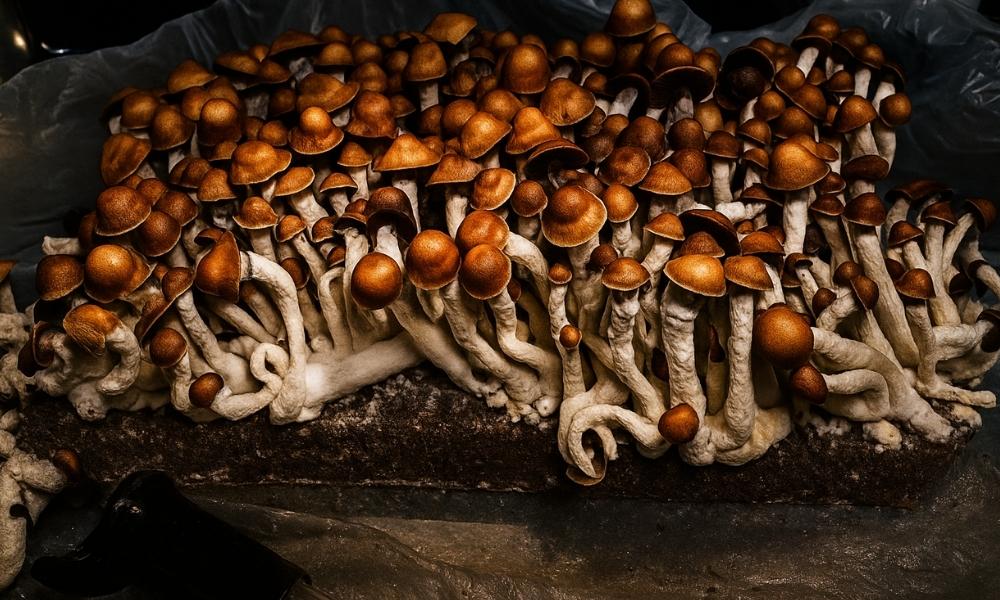
Have you ever encountered a mushroom strain that completely defies convention? The Penis Envy mushroom isn’t just another Psilocybe cubensis variety—it’s a genetic marvel that has mystified researchers and redefined what we thought we knew about fungal morphology. This extraordinary strain challenges every textbook definition with its rebellious genetics and jaw-dropping appearance.
Picture this: while most cubensis strains follow predictable patterns, Penis Envy throws the rulebook out the window. For those passionate about spore syringes for microscopy research, PE isn’t just another specimen—it’s the holy grail of fungal anomalies. Today, we’re diving deep into what makes this strain a legend in mycological circles. And yes, before we go further, remember these spores are strictly for microscopy and taxonomy research only—cultivation is off the table.
What Makes Penis Envy Mushrooms Unique?
Here’s where things get truly fascinating. While your average Psilocybe cubensis plays by the rules, Penis Envy stands out as a psychoactive mushroom, belonging to the broader category of psychoactive fungi known for their psilocybin content and mind-altering effects. Penis Envy seems to have evolved with a rebellious streak. Every characteristic that defines this strain reads like nature’s experiment in pushing boundaries—and the results are nothing short of spectacular for microscopy research.
There is a growing interest in Penis Envy mushrooms among researchers and enthusiasts, driven by their unique characteristics and the broader resurgence of scientific studies into psychoactive mushrooms.
Morphological Characteristics
Let’s address the elephant in the room—yes, the name is exactly what you think. But beyond the memorable moniker lies a morphological wonder. Where typical cubensis strains develop elegant, umbrella-like caps atop slender stems, PE specimens rebel with thick, muscular stems that dwarf their cousins. The caps? Often so underdeveloped they’re barely there, sometimes missing entirely. The fruiting body of Penis Envy is distinct from other cubensis strains, with unique reproductive and psychoactive properties that set it apart. It’s as if nature decided to create a bodybuilder among ballerinas.
Now here’s what really gets researchers excited: place Penis Envy spores under a microscope, and you’ll discover another layer of mystery. This strain is remarkably stingy with its spores—producing far fewer than any respectable cubensis should. Some specimens border on sterility, releasing only a handful of viable spores. For taxonomy studies, this reproductive shyness makes each spore a precious commodity worth its weight in scientific gold.
Genetic Profile and Mutations
The genetic story behind Penis Envy reads like a scientific thriller. According to fascinating research published in peer-reviewed scientific journals, this strain emerged as a spontaneous mutant—a one-in-a-million genetic accident from an Amazonian P. cubensis ancestor. But here’s the kicker: instead of reverting to normal, PE stubbornly maintains its bizarre traits generation after generation through clonal propagation.
Think about that for a moment. While other strains shuffle their genetic deck with each spore release, Penis Envy essentially photocopies itself. Studying different strains of Psilocybe cubensis, including Penis Envy, helps researchers understand the genetic diversity and evolutionary mechanisms within the species. Scientists suspect PE harbors specific mutations that rewired its entire developmental blueprint—affecting everything from how it builds fruiting bodies to why it’s so reluctant to produce spores. This genetic time capsule offers researchers an unprecedented window into how fungi lock in evolutionary changes.
Scientific Classification and Taxonomy
Let’s get technical for a moment—but don’t worry, this taxonomy lesson comes with a twist. Understanding where Penis Envy fits in the fungal family tree reveals just how remarkable this outlier truly is:
Kingdom: Fungi
Division: Basidiomycota
Class: Agaricomycetes
Order: Agaricales
Family: Hymenogastraceae
Genus: Psilocybe
Species: cubensis
Strain: Penis Envy
Penis Envy is a psilocybin mushroom, a type of hallucinogenic fungi known for its psychoactive properties.
See that classification? Penis Envy sits squarely in the Psilocybe cubensis family—yet it’s the black sheep that makes family reunions interesting. For researchers working with spore swabs or spore prints for microscopy, this taxonomic placement is your roadmap to understanding PE’s place in the fungal kingdom.
History and Origin of the Penis Envy Strain
Every legend has an origin story, and Penis Envy’s tale is shrouded in equal parts science and mycological folklore. Picture the Amazon rainforest—nature’s laboratory where millions of species compete, adapt, and occasionally produce something extraordinary. This region is renowned for producing a variety of psychoactive mushrooms, which have been studied for their unique effects and cultural significance. From this crucible emerged a mutation so unusual that it caught the eye of pioneering researchers.
The late 20th century saw PE burst onto the mycological scene like a rock star. Word spread quickly through research circles: here was a cubensis strain that broke every rule in the book. Instead of fading away like most mutations, PE showed remarkable staying power. Generation after generation, it maintained its distinctive features with the consistency of a Swiss watch. This genetic stubbornness transformed PE from a curiosity into one of the most intensively studied strains in taxonomy research.
But wait—the plot thickens. As researchers delved deeper, they discovered PE wasn’t alone. Like a family with distinctive genes, several variants emerged from the original lineage. Enter Albino Penis Envy (APE), the ghostly pale cousin that took PE’s already unusual traits and painted them white. Each variant tells its own chapter in this ongoing scientific saga.
Penis Envy Varieties and Phenotypes
Albino Penis Envy (APE)
If regular Penis Envy is the rebel of the cubensis world, then Albino Penis Envy is the rebel with a cause—and that cause is breaking every remaining convention. Imagine PE’s already bizarre morphology stripped of all color, leaving behind ghostly white specimens that look more like sculptures than mushrooms. APE doesn’t just lack pigmentation; it’s achieved a level of paleness that would make fresh snow jealous.
What’s truly mind-blowing for microscopy researchers? This albinism isn’t a fluke—it’s locked in tight. Generation after generation, APE spores reliably produce the same ethereal specimens. We’re talking about stable mutations in melanin production pathways that geneticists dream about. Each APE spore is like a tiny genetic time capsule preserving this extraordinary trait.
Penis Envy Uncut
The name might raise eyebrows, but Penis Envy Uncut has earned its place in research labs worldwide. This variant strikes a delicate balance—maintaining PE’s signature thick stems and unusual morphology while being slightly more generous with spore production. Still stingy by normal cubensis standards, mind you, but for researchers desperate for PE genetics, those extra spores are worth their weight in gold.
Penis Envy #6
Here’s where genetics gets really interesting. PE6 emerged from an ambitious crossbreeding experiment—what happens when you introduce Texas cubensis DNA into the PE lineage? The result is a fascinating compromise: a strain that inherited enough PE morphology to remain distinctive, yet recovered some reproductive normalcy. For enthusiasts exploring varieties through our mycology resources, PE6 represents evolution in action—a genetic negotiation between two very different fungal philosophies.
Chemistry and Psychoactive Compounds
When it comes to what sets psilocybin mushrooms apart, it all boils down to their chemistry—and Penis Envy is no exception. Like other psychedelic mushrooms, Penis Envy contains the powerhouse duo of psychoactive compounds: psilocybin and psilocin. These molecules are the architects behind the mind-bending experiences that have made magic mushrooms famous. Once ingested, psilocybin is swiftly converted into psilocin, which then interacts with serotonin receptors in the brain. The result? A cascade of effects ranging from vivid visual and auditory hallucinations to profound shifts in perception, mood, and cognition.
But here’s where things get even more interesting: not all mushroom species are created equal when it comes to their chemical makeup. Research has shown that Penis Envy boasts some of the highest psilocybin and psilocin content among psilocybin containing mushrooms, contributing to its reputation for overall potency. These key differences in psilocin content and the balance of other psychoactive compounds mean that the altered perception and intensity of the experience can vary dramatically between strains. For those studying the chemistry of mushrooms, Penis Envy offers a fascinating case study in how subtle shifts in active compounds can lead to a world of difference in psychoactive effects.
Cultivation and Growth
Growing Penis Envy mushrooms is a journey into the quirks of the psilocybe cubensis family. While all cubensis strains thrive in humid environments rich in nutrients, Penis Envy demands a bit more attention to detail. Its growth is marked by a thick stem and a rounded cap—features that set it apart from its more slender, umbrella-capped relatives. These morphological traits aren’t just for show; they’re influenced by environmental factors like temperature, humidity, and the composition of the growing substrate.
Cultivators have found that even small tweaks in these conditions can impact not only the yield but also the psychoactive effects and mushroom potency. The presence of healthy mycelium and a well-chosen substrate can make the difference between a lackluster flush and a crop of robust, potent mushrooms. For those exploring the world of Penis Envy, understanding how environmental factors shape the growth of these mushrooms is key to unlocking their full potential—and appreciating the unique characteristics that make this strain a standout among cubensis strains.
Microscopy Research Applications
Now we arrive at the heart of why Penis Envy captivates the scientific community. This isn’t just about looking at spores under a lens—it’s about unraveling mysteries that could reshape our understanding of fungal biology. Every PE specimen is a research goldmine waiting to be explored. Ongoing research efforts continue to uncover new insights into the biology and genetics of this unique strain. And yes, before we dive deeper, let’s be crystal clear: these investigations are strictly microscopy-based. No cultivation. Period.

Spore Morphology Studies
Slide a Penis Envy spore under a microscope, and prepare for a revelation. Where other cubensis spores march in predictable formations, PE spores are the individualists—each one slightly different, as if expressing their parent’s rebellious nature at the cellular level. Researchers scrutinize these variations like detectives examining fingerprints, cataloging differences in size, shape, and that distinctive purplish-brown hue.
Here’s the beautiful irony: PE’s stinginess with spores actually enhances their research value. When you’re dealing with thousands instead of millions, each spore becomes a character in the story. Scientists can literally follow individual spores through their observations, tracking structural nuances that would be lost in the crowd with prolific sporulators. It’s quality over quantity at its finest.
Genetic Research Opportunities
This is where Penis Envy transforms from curiosity to scientific treasure. The brilliant minds at the National Center for Biotechnology Information have identified specific single-nucleotide polymorphisms (SNPs) in PE that read like a genetic blueprint for rebellion. We’re talking about tiny molecular switches that somehow orchestrate PE’s entire bizarre appearance.
Consider the implications: PE’s clonal propagation has created a living fossil of fungal genetics. While other strains evolve and adapt with each generation, Penis Envy preserves its mutations like amber preserves ancient insects. Researchers studying PE aren’t just looking at a mushroom strain—they’re peering through a window into evolutionary mechanisms that normally hide in the genetic shuffle. Every PE sample tells the same story of how nature locks in radical changes.
Comparing Penis Envy to Other Psilocybe Cubensis Strains
Time for a family comparison that reveals just how far Penis Envy has strayed from its cubensis relatives. Think of it as placing a bodybuilder next to marathon runners—same species, wildly different evolutionary strategies.
Researchers often compare the potency of different strains using dried mushrooms or dried mushroom material to ensure consistency in measurements.
Penis Envy vs. Golden Teacher
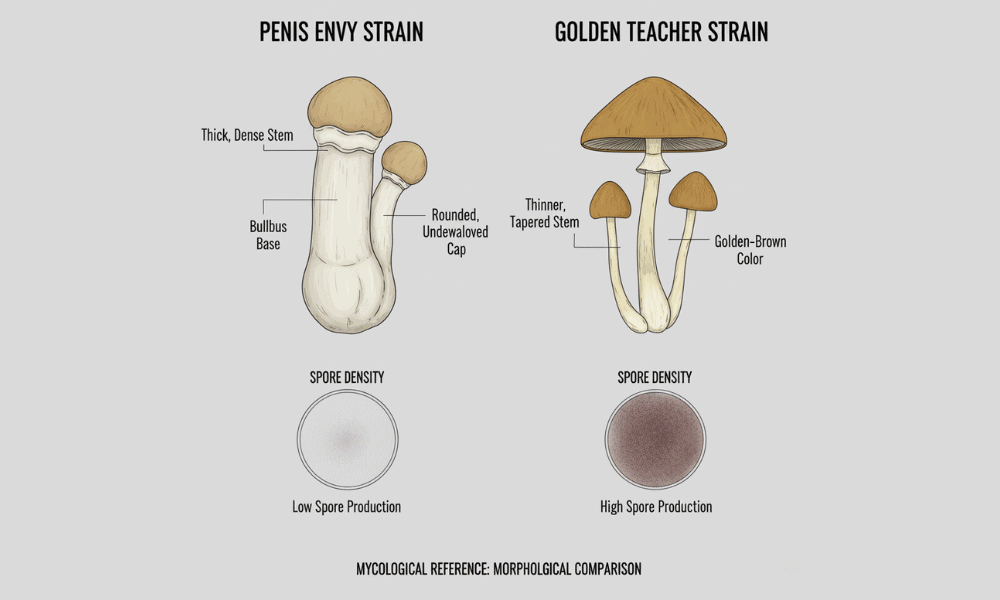
Ah, the classic matchup. Golden Teacher is the honor student of the cubensis world—reliable, prolific, and textbook perfect. This strain churns out spores like a printing press, creating beautiful dark purple prints that researchers adore. Meanwhile, Penis Envy sits in the corner, defying expectations with its “quality over quantity” approach to reproduction.
The visual contrast is striking. Golden Teacher sports that classic mushroom silhouette—elegant golden-brown caps perched atop slender stems like tiny umbrellas. Penis Envy? It looks like it spent too much time at the gym, developing massive stems while forgetting caps exist. Under the microscope, this David-and-Goliath comparison becomes even more fascinating.
Penis Envy vs. Blue Meanie
Now here’s a showdown between two strains with attitude. Blue Meanie earned its name through dramatic bluing reactions—handle it, and watch it transform like a mood ring. This strain is the extrovert, producing spores by the millions and announcing its presence with color changes. Penis Envy plays it cool, showing subtle bluing while hoarding its spores like precious gems.
For researchers mapping the cubensis family tree, these comparisons are invaluable. Each strain represents a different solution to the same evolutionary puzzle. Together, they showcase the incredible plasticity of P. cubensis—how one species can express itself in radically different forms while maintaining its core identity.
Research Significance and Scientific Value
Let’s zoom out for a moment and appreciate why Penis Envy matters beyond its shock value name and bizarre appearance. This strain isn’t just a mycological oddity—it’s rewriting chapters in our understanding of how life evolves, adapts, and sometimes takes spectacular detours from the norm. Research into Penis Envy and related strains may also contribute to understanding the therapeutic effects of psilocybin mushrooms in mental health treatment.
Taxonomic Classification Studies
Penis Envy is taxonomy’s greatest puzzle and gift rolled into one. Its unwavering consistency across generations acts like a genetic beacon for researchers trying to map the boundaries of fungal classification. When every other strain seems to blur the lines, PE stands firm—a morphological lighthouse in a sea of variation.
But here’s where it gets philosophically interesting: PE forces us to question what defines a strain versus a variety versus a species. If a mushroom looks nothing like its cousins but shares their DNA, where do we draw the line? These aren’t just academic questions—they’re fundamental to understanding biodiversity itself. Every PE specimen challenges our neat classification boxes, demanding we think bigger.
Evolutionary Biology Research
Imagine discovering a time machine that shows evolution in action—that’s Penis Envy for evolutionary biologists. This strain captures a pivotal moment when a random mutation didn’t just survive but thrived, locking itself into genetic permanence. It’s evolution’s equivalent of catching lightning in a bottle.
Recent publications in mycological journals have dropped a bombshell hypothesis: PE might represent fungal domestication syndrome. Just as wolves became dogs through human selection, Penis Envy may have evolved its extreme traits in response to human cultivation pressures. We’re not just studying a mushroom—we’re examining how human activity shapes evolution itself. Every PE spore carries evidence of this remarkable co-evolutionary dance.
Laboratory Equipment and Techniques for PE Research
Ready to get hands-on with Penis Envy research? Let’s talk tools and techniques—because studying this extraordinary strain demands more than just squinting through a dusty microscope. PE deserves the VIP treatment in your research setup. Advanced analytical techniques such as liquid chromatography are often used to quantify psilocybin and psilocin content in mushroom samples.
Microscopy Equipment Requirements
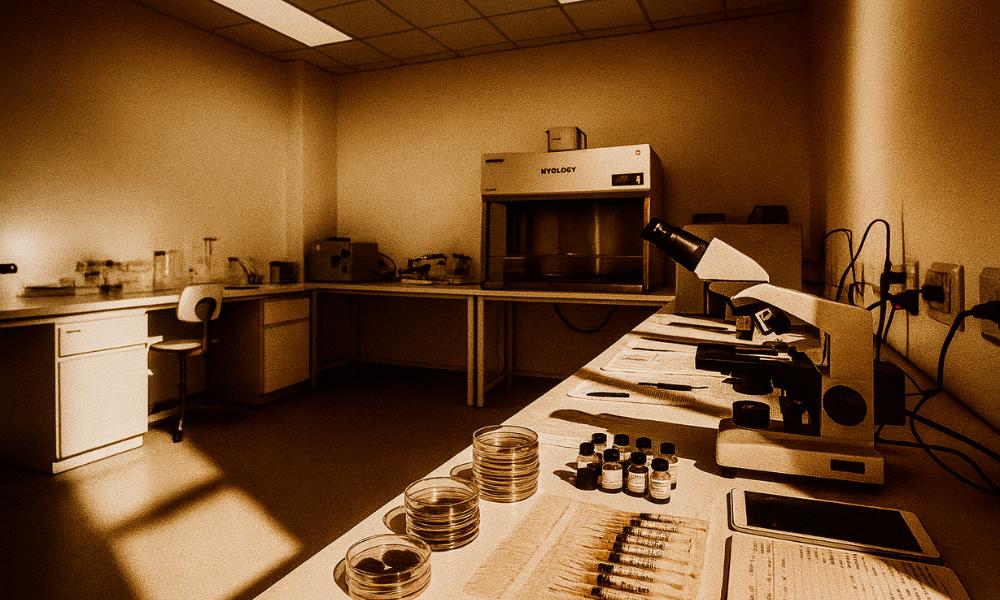
First things first: you’ll need serious optical firepower. We’re talking compound microscopes with 400x to 1000x magnification—anything less and you’re missing the show. At these magnifications, PE spores transform from invisible specks into architectural marvels, revealing surface textures and internal structures that tell their genetic story. Pro tip: attach a digital camera or smartphone adapter. Trust me, you’ll want to document these observations—PE spores are too remarkable not to share with fellow researchers.
Now for the secret sauce: staining. Naked PE spores are impressive, but add lactophenol cotton blue or Melzer’s reagent, and suddenly you’re seeing details that would make Antonie van Leeuwenhoek jealous. These stains illuminate structures invisible to the naked eye—cell walls pop, internal features emerge, and suddenly you’re not just looking at spores, you’re reading their biological blueprint.
Sample Preparation Methods
Here’s where technique separates amateur hour from professional research. Creating the perfect spore suspension slide is part science, part art. Start with sterile water or specialized mounting media—contamination is the enemy of clear observation. Your slides and coverslips should be cleaner than a surgical suite. One fingerprint, one dust particle, and you’re looking at artifacts instead of PE’s true nature.
Environmental control isn’t optional—it’s essential. Penis Envy spores are divas about temperature and humidity. Too dry, they shrivel. Too humid, they blur. Find that Goldilocks zone and maintain it religiously. Consistency is key: today’s observations should match tomorrow’s, next week’s, and next month’s. That’s how real science happens—through reproducible, meticulous methodology.
Emotional Effects and Benefits
The emotional effects of Penis Envy mushrooms are as distinctive as their appearance. Thanks to their rich concentration of psychoactive compounds, these mushrooms can usher in experiences that range from deeply mystical to profoundly therapeutic. Many users describe a surge of euphoria, heightened creativity, and a sense of connection that borders on the spiritual. For some, the journey includes powerful introspection and emotional release, opening doors to personal insights and healing.
Clinical research into psilocybin assisted therapy has shed light on the therapeutic potential of mushrooms like Penis Envy, particularly in the treatment of major depressive disorder and other psychiatric conditions. Studies suggest that, under the right conditions and with proper psychological support, these mushrooms can help alleviate negative emotions and foster lasting positive change. However, the intensity of the emotional effects means that set and setting are crucial—a supportive environment and experienced guidance can make all the difference in ensuring a safe and beneficial experience.
Risks and Negative Effects
While the allure of Penis Envy mushrooms is undeniable, it’s important to recognize that their high potency comes with real risks. As with other hallucinogenic drugs, psilocybin mushrooms can trigger anxiety, paranoia, and intense emotional distress—especially in individuals with a history of mental health challenges. The unpredictable nature of a “bad trip” can lead to frightening or overwhelming experiences, underscoring the need for careful strain selection, dose control, and a supportive environment.
The variability in potency among psilocybin containing mushrooms, and particularly within the Penis Envy strain, means that even experienced users can be caught off guard by the strength of their effects. As interest in the therapeutic potential of these mushrooms grows, further research and regulatory oversight are essential to ensure safe and responsible use. Whether for scientific study or potential therapeutic use, approaching Penis Envy mushrooms with respect and caution is the best way to minimize risks and maximize benefits.
Legal and Ethical Considerations
Let’s address the legal elephant in the room with absolute clarity. Yes, Penis Envy spores are legal for microscopy research in most jurisdictions—they’re just genetic material, after all. But here’s the non-negotiable line in the sand: cultivation crosses into illegal territory in most places. This isn’t a gray area; it’s black and white. Microscopy only. Full stop.
The legal status of psilocybin mushrooms varies widely across countries, states, and cities. Recent efforts to decriminalize psilocybin have led to changes in some jurisdictions, but most still prohibit cultivation and possession. These evolving legal frameworks impact not only personal use but also research, especially as more attention is given to the therapeutic potential of psilocybin in clinical settings. Clinical trials, often led by organizations like Compass Pathways, are essential for evaluating the safety and efficacy of psychedelic assisted therapy and psychedelic therapy for mental health conditions. Such research must be conducted in regulated clinical settings to ensure compliance and patient safety.
Professional researchers know that meticulous documentation isn’t just good science—it’s legal protection. Every slide examined, every observation recorded, every image captured needs a paper trail. Think of it as building an unassailable fortress of legitimate scientific inquiry. Your research notebook isn’t just data; it’s proof that you’re advancing knowledge within legal boundaries.
And here’s something many newcomers overlook: institutions have their own rules beyond legal requirements. Universities, research facilities, even amateur mycology clubs often maintain strict protocols for handling psilocybe specimens. Do your homework before ordering that first spore syringe. A quick email to your institution’s compliance officer could save you from awkward conversations later. Remember, legitimate research thrives in transparency.
Future Research Directions
Buckle up, because the future of Penis Envy research is about to get wild. We’re entering an era where genomics and proteomics are cracking open mysteries that microscopes alone could never solve. Imagine reading PE’s entire genetic instruction manual, letter by letter—that’s exactly what’s happening in labs right now.
The visionaries at the North American Mycological Association report that cutting-edge sequencing technologies are mapping PE’s complete genome as we speak. We’re not just identifying mutations anymore—we’re understanding how they cascade through biological systems, creating the morphological marvels we observe. It’s like having the blueprint and watching the construction in real-time.
Future research efforts may also compare the effects of pure psilocybin with those of whole mushrooms, exploring differences in potency, therapeutic potential, and possible entourage effects. This work with Penis Envy mushrooms contributes to the broader understanding of psychedelic drugs and their place within the larger category of psychoactive drugs, shedding light on their mechanisms of action and clinical applications.
But here’s what really excites forward-thinking researchers: PE’s mutations might hold keys to understanding fundamental biological processes. How do organisms lock in evolutionary changes? What genetic switches control development? These aren’t just mushroom questions—they’re life questions. Penis Envy, in all its unconventional glory, might help us understand how nature innovates. The implications ripple far beyond mycology into medicine, agriculture, and evolutionary biology itself.
Conclusion
So here we are, at the end of our journey through the remarkable world of Penis Envy mushrooms. What started as a genetic accident in the Amazon has become one of mycology’s most valuable research tools. This strain doesn’t just break rules—it rewrites them, forcing us to expand our understanding of what’s possible in fungal evolution.
For those drawn to microscopy research, Penis Envy offers something truly special: a chance to witness nature’s rebellious streak up close. Every spore tells a story of mutation, adaptation, and genetic defiance. But let’s circle back to that critical point one last time—these specimens are for microscopy and taxonomy studies only. The line between legal research and illegal cultivation is bright and unmovable. Respect it, and you’ll find a lifetime of fascinating discoveries awaiting your microscope.
Looking ahead, Penis Envy will undoubtedly continue surprising us. As our tools get sharper and our understanding deeper, this strain will reveal new secrets about life’s fundamental processes. Research on Penis Envy not only advances our knowledge of hallucinogenic mushrooms but also contributes to the broader field of psychedelic substances, helping scientists explore the mechanisms behind the mystical experiences often reported by users. Maybe PE’s mutations will inspire biotechnology breakthroughs. Perhaps its genetic stability will unlock agricultural innovations. The possibilities are as boundless as science itself.
Whether you’re a seasoned researcher with decades of experience or someone just discovering the wonders of mycology, Penis Envy stands ready to challenge your assumptions. It’s more than a mushroom—it’s a testament to nature’s creativity, a puzzle for curious minds, and a reminder that even in well-studied species, extraordinary surprises await. Welcome to the fascinating, frustrating, absolutely captivating world of Penis Envy research. Trust me, once you peer through that microscope at your first PE spore, you’ll understand why this strain has captured hearts and minds across the mycological community.
