

In the world of Psilocybe cubensis strains, few command as much intrigue as the Albino Penis Envy mushroom. This pale, potent variant has captivated mycology enthusiasts with its unique genetics, striking appearance, and legendary strength. As a psychoactive mushroom, Albino Penis Envy is one of many mushroom species within the genus Psilocybe, standing out among common species such as Psilocybe semilanceata (liberty caps) and others. While APE is highly prized, it is less commonly found than some other well-known common species, highlighting the diversity of psychoactive mushroom species available to researchers and enthusiasts.
Whether you’re researching mushroom taxonomy or exploring the fascinating diversity of cubensis varieties, APE stands out as one of the most distinctive strains in cultivation circles. Let’s explore what makes Albino Penis Envy so special—from its genetic origins to its identification features, potency profile, and place within the broader landscape of psilocybin-containing mushrooms.
What Is Albino Penis Envy?
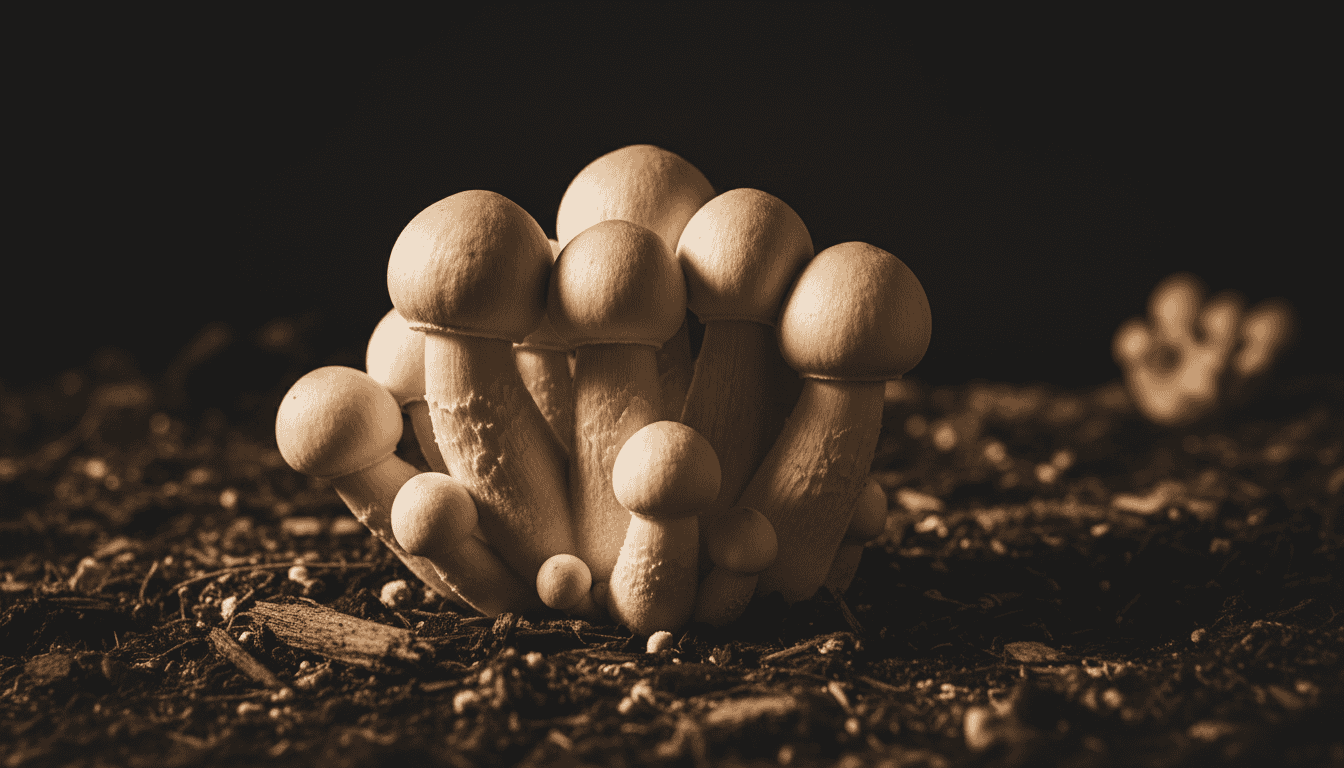
Albino Penis Envy, commonly abbreviated as APE, represents a leucistic mutation of the already-legendary Penis Envy strain. This mutation results in reduced pigmentation, giving the mushrooms their characteristic ghostly white appearance with pale cream-colored caps and thick, dense stems.
While APE and other Penis Envy variants are considered different strains, they all belong to the same species, Psilocybe cubensis.
The Genetics Behind the Ghost
The genetic story of APE involves a complex breeding history. Penis Envy itself emerged from extensive selective breeding work, creating a strain known for unusually thick stems and reduced spore production. The albino variant takes this further with a leucistic mutation affecting pigment expression. Research into Psilocybe cubensis genetics has revealed fascinating insights into how mutations affect both appearance and chemical composition. Potency depends on these genetic mutations as well as environmental influences, which together shape the strength and effects of the strain. A genomic study published in the National Institutes of Health database identified specific mutations in the N-methyltransferase (psiM) gene among Penis Envy strains, potentially linked to their distinctive characteristics and elevated alkaloid content.
Leucistic vs. True Albino: Understanding the Science
Despite its name, Albino Penis Envy is technically leucistic rather than truly albino. This distinction matters for accurate taxonomy. The fruiting body, which is the mature, visible structure of the mushroom, appears pale in leucistic variants. True albinos produce clear or translucent spores due to complete melanin absence, while leucistic variants retain dark purple-brown spores despite their pale fruiting bodies. According to mycological education resources, leucism involves partial pigment loss in tissues but maintains normal spore pigmentation. This genetic difference explains why APE spores appear dark when viewed under magnification, even though the mushroom itself looks nearly white.
Identifying Albino Penis Envy Mushrooms
Visual identification of APE involves recognizing several distinctive physical characteristics that set it apart from other cubensis varieties.
Distinctive Physical Characteristics
APE mushrooms exhibit an unmistakable morphology. The stems grow exceptionally thick and dense—often as wide or wider than the caps themselves. Caps tend to remain small and bulbous, rarely opening fully even at maturity. This compact, robust structure gives APE a distinctly different silhouette compared to tall, thin-stemmed varieties like Golden Teacher. The coloration ranges from pure white to pale cream, with occasional faint blue-gray tones. This muted palette creates the “albino” appearance, though careful observation reveals subtle color variations across different growth stages.
The Blue Bruising Phenomenon
One of APE’s most notable features is its intense blue bruising reaction. When handled or damaged, the pale tissue rapidly develops vivid blue discoloration. This oxidation reaction occurs when psilocin—the primary psychoactive compound—contacts oxygen, creating distinctive blue-indigo staining. The intensity of the bruising can be influenced by the psilocin content present in the mushroom tissue. This bruising intensity often exceeds that of standard cubensis strains, which some cultivators interpret as an indicator of higher alkaloid concentrations. The contrast between white flesh and deep blue bruising makes for particularly striking visual identification.
Spore Color Identification
Under microscopic examination, APE spores display the characteristic dark purple-brown coloration typical ofPsilocybe cubensis. This definitively classifies APE as leucistic rather than true albino, an important distinction for mycologists studying fungal pigmentation genetics.

The Legendary Potency of APE
Albino Penis Envy has developed a reputation within mycology circles for notably high psilocybin content compared to average cubensis strains. As a potent strain, APE is often considered stronger than many other strains, including both cultivated varieties and wild strains, due to its unique characteristics and powerful effects.
Potency can vary from flush to flush, and even between individual mushrooms, as the levels of active compounds such as psilocybin and psilocin may differ between wild strains and cultivated varieties.
What the Research Shows
While comprehensive analytical testing remains limited, available data suggests APE consistently produces above-average psilocybin concentrations. The genetic mutations affecting Penis Envy strains may influence biosynthetic pathways responsible for alkaloid production. Scientific literature examining Psilocybe species chemistry has documented significant strain-to-strain variability. Analytical techniques such as liquid chromatography, particularly high performance liquid chromatography (HPLC), are commonly used in research studies to quantify psilocybin and psilocin levels. One factor potentially contributing to APE’s potency involves the reduced reproductive effort—with minimal spore production, metabolic resources may redirect toward secondary metabolite synthesis, including psilocybin and psilocin.
Comparative Potency Analysis
When compared to common varieties like Golden Teacher or B+, APE typically shows higher psilocybin content per gram of dried material. However, potency varies considerably based on cultivation conditions, substrate nutrition, and individual genetic variation within the strain. The Penis Envy genetics underlying APE appear to reliably produce elevated alkaloid levels across different growing environments. This consistency contributes to the strain’s popularity despite cultivation challenges.
Dosage Considerations
Due to its elevated potency, standard dosage guidelines require adjustment. Researchers and harm reduction educators recommend starting with approximately two-thirds the amount one might use with standard cubensis varieties, then adjusting based on individual response and experience level. Some users may also choose to experiment with low doses, or microdoses, to minimize the risk of overwhelming effects, especially when first encountering a potent strain like APE.
APE Variants and Related Strains
The Albino Penis Envy lineage has spawned several notable variants, each with distinct characteristics.
APE Revert: When Albino Traits Reverse
APE Revert represents a fascinating genetic phenomenon where pigmentation partially returns across successive generations. These mushrooms display more coloration than pure APE—often showing tan or golden caps—while retaining the characteristic thick-stemmed Penis Envy morphology and elevated potency. This reversion illustrates the genetic instability sometimes present in cultivated mutations. Some growers actually prefer APE Revert for its combination of visual appeal and maintained strength characteristics.
True Albino Penis Envy (TAPE)
True Albino Penis Envy takes the pigment reduction to completion, producing clear or translucent spores alongside completely white fruiting bodies. TAPE represents a rarer mutation and presents significant cultivation challenges due to its genetic delicacy and extremely low spore viability.

Cultivation Insights for Enthusiasts
Understanding APE’s growth characteristics provides valuable context for mycological education and research purposes. While APE is known for its slow and sometimes unpredictable growth, successful cultivation depends on carefully managing environmental factors such as temperature, humidity, and substrate composition to optimize yield and consistency.
APE prefers warm, moist conditions and benefits from indirect light during the fruiting stage. Like many other mushrooms grown for research, APE thrives in humid environments that support healthy fruiting and development. Proper airflow and maintaining high humidity are essential for encouraging robust growth and maximizing the potential of each flush.
Why APE Is Challenging to Grow
Albino Penis Envy presents several cultivation obstacles that make it less beginner-friendly than robust strains. The dramatically reduced spore production means traditional spore prints are rarely viable. Instead, APE typically propagates through spore swabs or tissue cultures, requiring more advanced techniques. Colonization proceeds slowly compared to aggressive varieties, often taking 25-40% longer to fully colonize substrate. Yields tend to be modest, with fewer but denser mushrooms per flush. These factors combine to make APE a specialty strain rather than a high-production workhorse.
Educational Overview of Growth Characteristics
For educational purposes, understanding APE’s environmental preferences helps illustrate how genetics influence cultivation requirements. The strain prefers slightly cooler fruiting temperatures (65-72°F) and benefits from high humidity levels (90-95%) during development. The extended timeline from inoculation to harvest typically spans 8-12 weeks under optimal conditions, compared to 6-8 weeks for faster-colonizing varieties. This extended duration requires patience and consistent environmental control.
Disclaimer: All spore products are sold for microscopy research and taxonomy identification purposes only. We do not support or condone the cultivation of psilocybin-containing species. Always consult local regulations before engaging in any mycological activities.
Effects and Experience Profile
Research into psilocybin-containing mushrooms has documented a range of subjective effects, with strain-specific variations reported by users. The psychedelic effects of APE include intense visuals and, at higher doses, intense visual hallucinations, as well as a variety of physical effects such as changes in body sensation. These hallucinogenic properties are due to the interaction of psilocybin and its metabolite psilocin with serotonin receptors in the brain, leading to profound alterations in perception, mood, and consciousness. The effects of psilocybin mushrooms are mediated by their action on the human body, particularly the central nervous system. Psilocybin is classified among psychoactive drugs due to its significant impact on mental states and sensory perception. The overall psychedelic experience can vary widely depending on dose, individual neurobiology, and environmental context.
Reported Characteristics
According to medical and health information sources, psilocybin produces effects including altered perception, changes in thought patterns, emotional shifts, and at higher doses, profound mystical-type experiences. The specific character of experiences varies considerably based on dose, individual neurobiology, and environmental context. APE’s higher potency translates to more intense effects at equivalent weights. Users report particularly strong visual alterations and deep introspective states, though individual responses vary widely.
Set and Setting Importance
Harm reduction organizations like Erowid emphasize the critical importance of preparation, environment, and mindset when engaging with psilocybin substances. Taking mushrooms in a supportive environment is crucial for safety and positive outcomes. Proper set and setting can significantly influence whether experiences prove challenging or beneficial. Research protocols from institutions like Johns Hopkins University consistently employ careful participant screening, comfortable environments, and professional support to optimize safety and outcomes; these studies are conducted in controlled clinical settings to ensure participant safety and standardized procedures.
Contraindications and Cautions
Individuals with personal or family history of psychotic disorders should avoid psilocybin substances. Certain medications, particularly SSRIs and MAOIs, may interact with psilocybin. Medical consultation is advisable before considering any psychoactive substances, especially for those with underlying health conditions.

Legal Status and Compliance
Understanding the legal framework surrounding psilocybin mushrooms and their spores is essential for compliance.
As perspectives shift and research into the psychoactive properties of hallucinogenic mushrooms expands, regulations continue to evolve. The European Monitoring Centre for Drugs and Drug Addiction provides authoritative information on the potency and risks associated with hallucinogenic mushrooms, helping to inform both policymakers and the public about their legal status and potential harms.
Spores vs. Fruiting Bodies
In most United States jurisdictions, psilocybin mushroom spores remain legal for microscopy research and taxonomy purposes, as they do not contain psilocybin or psilocin. However, three states—California, Georgia, and Idaho—have enacted specific restrictions onPsilocybespores. Products like APE spore swabs are sold explicitly for microscopy examination and taxonomic study. Cultivation of psilocybin-containing species remains federally prohibited under the Controlled Substances Act.
Current Legal Landscape (2025)
The legal status of psilocybin continues evolving. Multiple cities and jurisdictions have decriminalized possession, and several states have implemented or are considering medical access frameworks. Organizations like Compass Pathways are leading efforts in the development and regulation of psilocybin-based therapies through clinical trials and research. Research from Johns Hopkins University has contributed to changing perspectives, with scientists recommending reassessment of psilocybin’s scheduling classification based on safety profiles and therapeutic potential. Individuals should research their specific local regulations before acquiring any mycological materials, as laws vary significantly by jurisdiction.
How APE Compares to Other Popular Strains
Placing Albino Penis Envy in context alongside other commonly studied varieties helps illustrate its unique position. In addition to well-known strains like Golden Teacher and Penis Envy, psilocybe cyanescens is another highly potent species, recognized for its distinctive wavy cap and high psilocybin content, and is native to temperate regions such as the Pacific Northwest.
When comparing potency and effects, APE stands out for its high psilocybin levels and intense experience. Some researchers suggest that the entourage effect—where multiple compounds in the mushroom, such as alkaloids and beta-carbolines, work synergistically—may contribute to the unique effects of APE compared to pure psilocybin. Studies comparing pure psilocybin to whole mushroom extracts have found differences in subjective effects, possibly due to the presence of additional bioactive compounds.
APE vs. Golden Teacher
Golden Teacher represents one of the most widely cultivated and commonly found cubensis strains, prized for reliability and moderate potency. Compared to APE, Golden Teacher grows faster, produces higher yields, and presents fewer cultivation challenges. However, APE delivers considerably higher psilocybin content per gram, making it popular despite lower productivity. Visually, the strains couldn’t be more different—Golden Teacher’s tall, golden-capped profile contrasts sharply with APE’s pale, compact morphology.
APE vs. Other Premium Strains
Among specialty strains, APE shares company with varieties like Enigma, another mutation prized for exceptional potency. While Enigma produces bizarre blob-like formations, APE maintains recognizable mushroom structure despite its unusual appearance. Compared to standard Penis Envy, APE adds the leucistic mutation to an already potent genetic foundation, creating what many consider the ultimate expression of the Penis Envy lineage.

Cultural Significance of Albino Penis Envy
The Albino Penis Envy strain occupies a legendary place in the world of psilocybin mushrooms, not just for its ghostly appearance and potent psychoactive effects, but for the cultural impact it has had among enthusiasts, researchers, and those exploring the therapeutic potential of psychoactive compounds. As a rare and highly sought-after variant of Psilocybe cubensis, APE has become a symbol of both the diversity and the evolving narrative surrounding psilocybin-containing mushrooms.
Within the community of mushroom aficionados, Albino Penis Envy is often regarded as a pinnacle of the genus Psilocybe. Its striking albino characteristics—stemming from a unique genetic mutation—set it apart visually, while its reputation for exceptionally high psilocybin levels makes it a coveted specimen for those interested in the full spectrum of psychoactive effects. The intense visual and auditory hallucinations, profound altered perception, and deep introspective experiences reported by users have contributed to its almost mythical status among different mushroom strains.
Beyond recreational circles, APE has also found a place in the expanding field of clinical research. As interest in the therapeutic use of psilocybin mushrooms grows, strains like Albino Penis Envy are increasingly studied for their potential to support mental health. Early studies suggest that psilocybin-containing mushrooms may offer significant benefits for conditions such as depression, anxiety, and even drug addiction. The unique genetic makeup and high psilocybin content of APE make it an intriguing candidate for further research into the mechanisms and outcomes of psychedelic-assisted therapy.
Culturally, the rise of Albino Penis Envy mirrors a broader shift in attitudes toward psychedelic drugs. As more regions move to decriminalize psilocybin and recognize the therapeutic potential of psychoactive mushrooms, APE stands as both a symbol of the mushroom world’s rich biodiversity and a touchstone for conversations about responsible psilocybin mushroom use. Its popularity underscores the importance of education, safety protocols, and respect for the powerful psychoactive compounds found in these mushrooms.
For those considering ingesting psilocybin mushrooms, especially potent strains like Albino Penis Envy, the importance of set and setting cannot be overstated. The intense psychoactive effects and potential for profound altered states require careful preparation and a supportive environment. As with all psilocybin mushroom use, a thoughtful approach helps ensure that the experience is both meaningful and safe.
In summary, the cultural significance of Albino Penis Envy extends far beyond its striking appearance or potent effects. It represents the intersection of tradition, innovation, and scientific curiosity within the world of psychoactive mushrooms. As research continues and societal attitudes evolve, APE remains at the forefront of discussions about the therapeutic potential, responsible use, and enduring fascination with psilocybin mushrooms.
Frequently Asked Questions
Is Albino Penis Envy the same as True Albino Teacher?
No, these represent distinct strains with different genetic lineages. True Albino Teacher derives from the Golden Teacher line with complete albino mutation, while APE comes from Penis Envy genetics with leucistic traits. They differ in morphology, growth characteristics, and chemical profiles.
Why are APE spores harder to find?
APE’s dramatically reduced spore production makes collection challenging. While most cubensis strains readily drop millions of spores, APE produces minimal spores, necessitating spore swabs rather than traditional prints or syringes. This scarcity contributes to higher prices and limited availability.
How long does APE take to colonize?
For educational context, APE typically requires 3-5 weeks for complete substrate colonization under optimal conditions, compared to 2-3 weeks for faster varieties. The extended timeline reflects its slower metabolism and denser growth pattern.
Is APE stronger than regular Penis Envy?
Both strains rank among the more potent cubensis varieties. Analytical testing suggests comparable psilocybin levels, with individual variation depending on cultivation conditions. Some cultivators report APE showing slightly higher consistency in potency across different grows.
Can you grow APE from spores?
Yes, though with greater difficulty than standard strains. The extremely low spore production means germination rates are lower and contamination risks higher. Many cultivators prefer working with liquid cultures or agar transfers to ensure cleaner, more reliable starts.
What’s the difference between APE and APE Revert?
APE Revert shows partial return of pigmentation, producing caps with tan or golden coloration rather than pure white. Despite the visual difference, APE Revert typically maintains the potency and growth characteristics of the original APE genetics.
Conclusion: The Appeal of Albino Penis Envy
Albino Penis Envy stands as one of mycology’s most fascinating subjects—a strain that combines unusual genetics, striking appearance, exceptional potency, and cultivation challenges into a single compelling package. For researchers, taxonomists, and microscopy enthusiasts, APE offers valuable insights into Psilocybe cubensis genetic variation and the beautiful complexity of fungal biology. Whether examined under a microscope to study its leucistic spores or appreciated as an example of selective breeding’s power, Albino Penis Envy reminds us that the fungal kingdom holds endless discoveries for those curious enough to look closer. Remember: all spore products exist for legitimate research, microscopy study, and taxonomy purposes only. Always respect local regulations and approach mycology with the scientific curiosity and ethical responsibility it deserves.
