

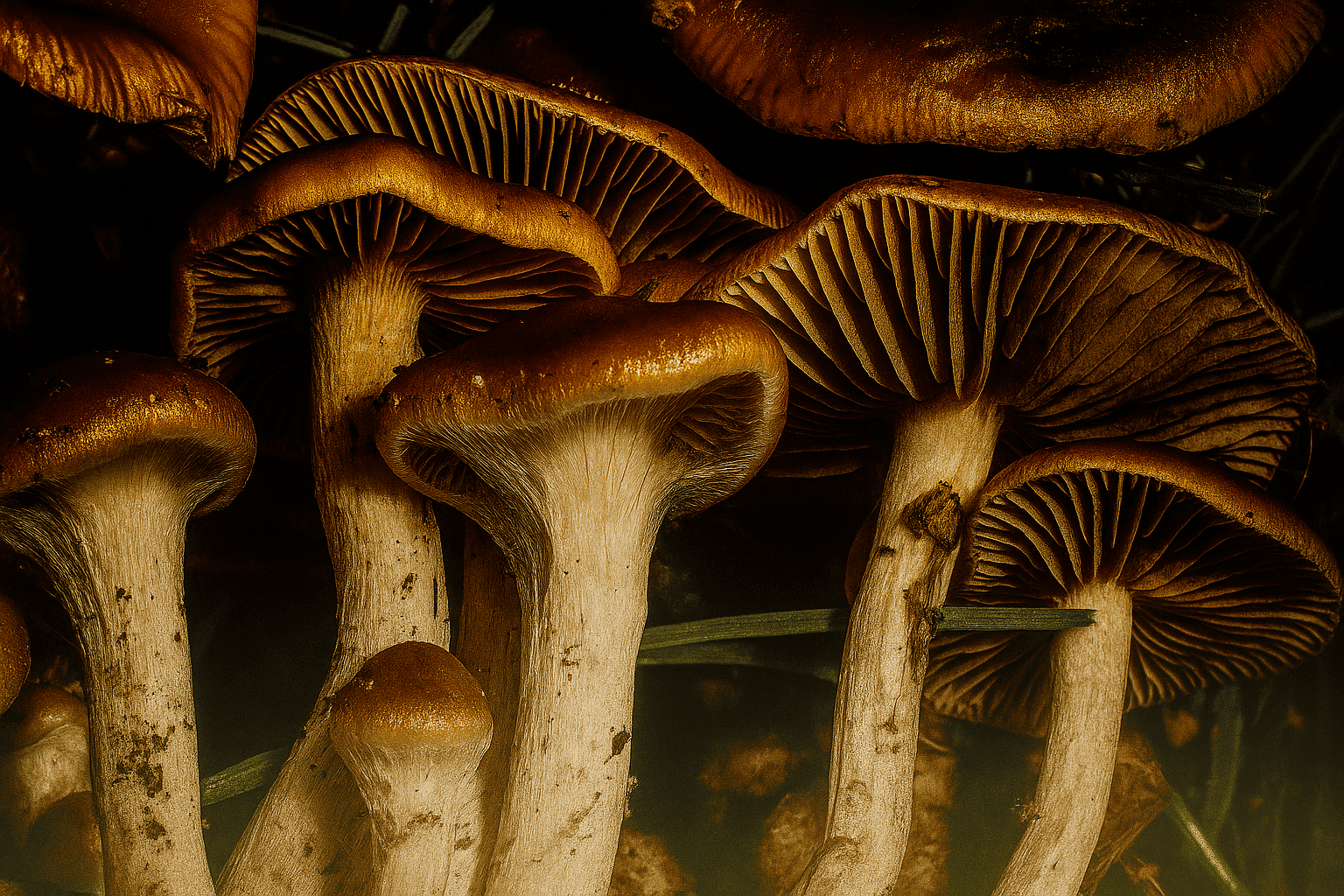
The wavy cap mushroom, scientifically known as Psilocybe cyanescens (Psilocybe cyanescens Wakef.), earns its name from the distinctive undulating margins of its cap. This potent species has become one of the most sought-after subjects for mycological research and microscopy study.
First described by British mycologist Elsie Wakefield in 1946 at Kew Gardens, this fascinating fungus has spread far beyond its original European habitat. Psilocybe cyanescens is considered one of the most interesting British fungi, with historical significance in British mycology. Today, wavy caps thrive across the Pacific Northwest, parts of Europe, and increasingly in urban environments where wood chips provide ideal growing conditions. The British Mycological Society is a key authority in documenting and classifying this species.
What makes P. cyanescens particularly interesting to researchers is its robust psilocybin content—ranging from 0.1% to 1.84% psilocybin and 0.04% to 1.81% psilocin—making it one of the most potent psilocybe species in the Psilocybe genus. But with great interest comes great responsibility: proper identification is absolutely critical for safety.
The species has earned several common names including “blueleg brownie” and simply “wavy caps.” Its preference for wood-based substrates and its remarkable ability to colonize urban mulch beds have made it increasingly common in cities from Seattle to London.
How to Identify Wavy Caps: Physical Characteristics
Accurate identification requires examining multiple physical features. Wavy caps belong to the caramel capped psilocybe complex, a group of closely related species with similar caramel-colored caps. A single characteristic alone is never sufficient for positive identification.
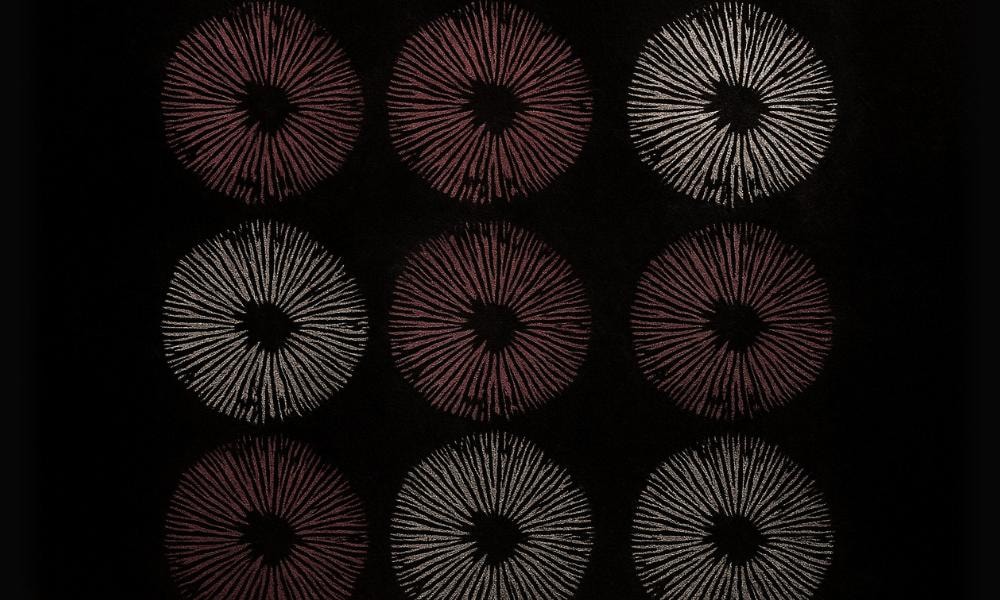
A spore print is essential for accurate identification, especially when distinguishing wavy caps from similar-looking species.
Cap Features: Color, Shape, & Texture
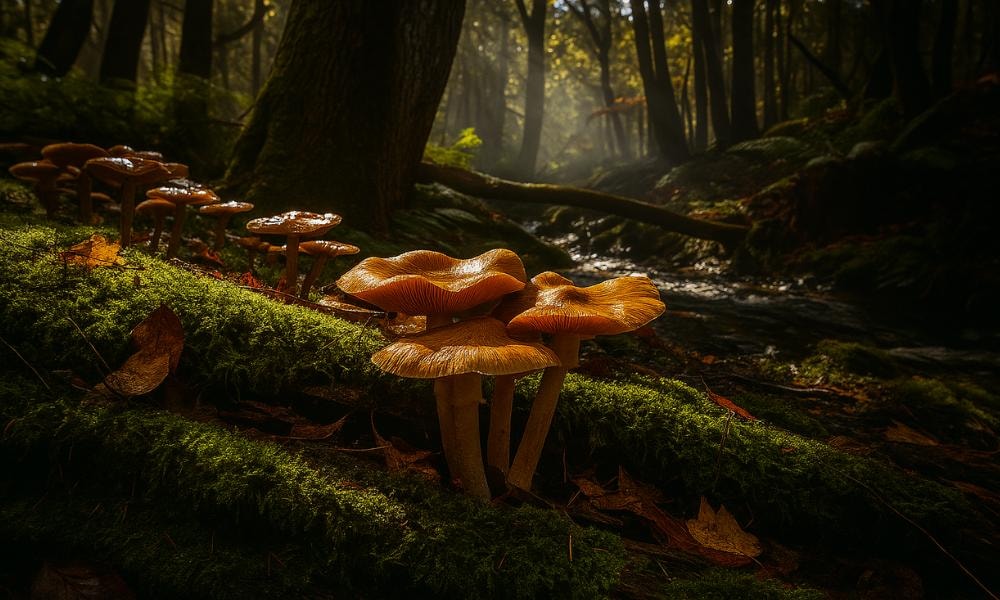
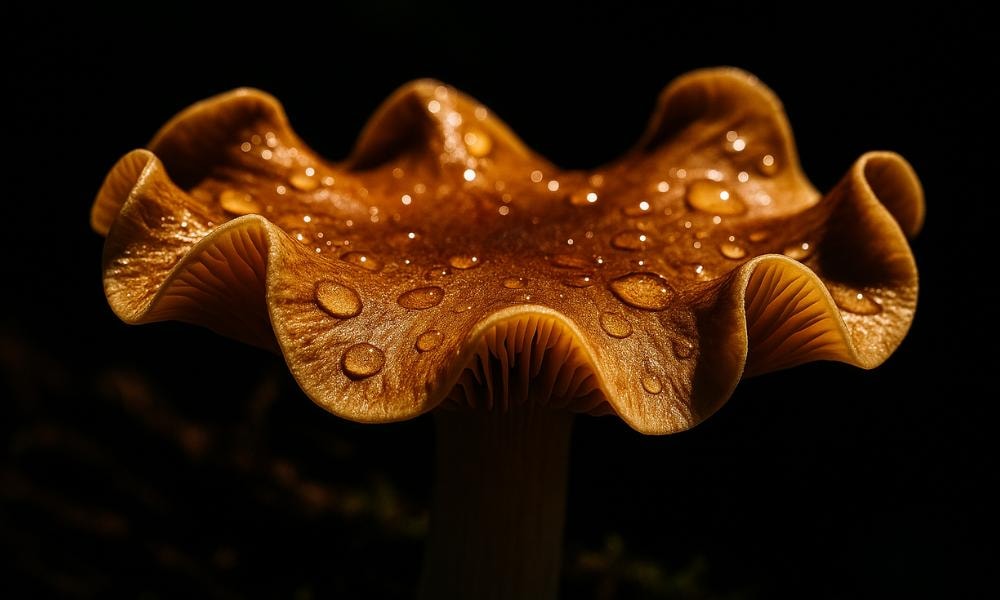
The cap of a mature wavy cap mushroom measures between 1.5-4 cm broad, though exceptional specimens can reach 5 cm. The defining feature—those characteristic wavy, undulating margins—becomes most pronounced as the mushroom matures.
Color shifts dramatically depending on moisture content. When wet, caps display a deep caramel brown to chestnut brown coloration with a slightly sticky (viscid) surface. As they dry, they fade to a light brown or buff color, often showing subtle concentric zones.
The cap shape evolves with age. Young specimens present convex or bell-shaped caps that gradually flatten with maturity, developing the signature wavy edges that give this species its common name. The center often retains a slight umbo (raised bump) even when fully expanded.
Stem & Gill Characteristics
The stem (stipe) grows 4-9 cm tall and 3-6 mm thick, appearing relatively slender and often slightly curved. Fresh stems display a whitish to pale brownish color with a silky, fibrous texture. A key feature: the partial veil leaves behind a fibrillose, cobwebby zone on the upper stem that quickly disappears with age.
Gills attach to the stem in an adnate to slightly decurrent pattern. They’re tightly packed and initially show a pale grayish-brown that transitions to dark purple-brown as spores mature. The gill edges often retain a whitish color even when spores darken.
Blue Bruising: The Critical Test
Here’s where wavy caps reveal their identity unmistakably: they bruise blue or blue-green when handled or damaged. Cyanescens generally bruise blueish when damaged, which is a key identification feature. This oxidation reaction occurs within minutes of handling and is one of the most reliable identification features of psilocybin-containing species.
The bluish staining appears most prominently on the stem base and damaged areas of the cap. Fresh specimens bruise more dramatically than older, dried ones. If you gently squeeze the stem between your fingers, blue-green streaks should appear within 5-10 minutes.
However—and this is crucial—blue bruising alone doesn’t confirm identity. Several other species also bruise blue, which is why you must examine all physical features together.

Where Wavy Caps Grow: Habitat & Distribution
Understanding habitat preferences is essential for both identification and research collection planning.
Psilocybe cyanescens is often associated with human-modified environments, but its cyanescens native habitat is speculated to be coniferous woodlands or coastal dunes in the Pacific Northwest.
While its original native range is still debated, the exact natural range of the species in the wild remains unknown.
The species is highly adaptable and can thrive in a variety of substrates. Cyanescens occurs in both natural and urban environments, which contributes to its broad distribution. In urban areas, mulched plant beds are a primary growth site for this species, facilitating its spread beyond its presumed native range.
Under suitable conditions, Psilocybe cyanescens can produce mushrooms prolifically in these environments.
Pacific Northwest & Beyond
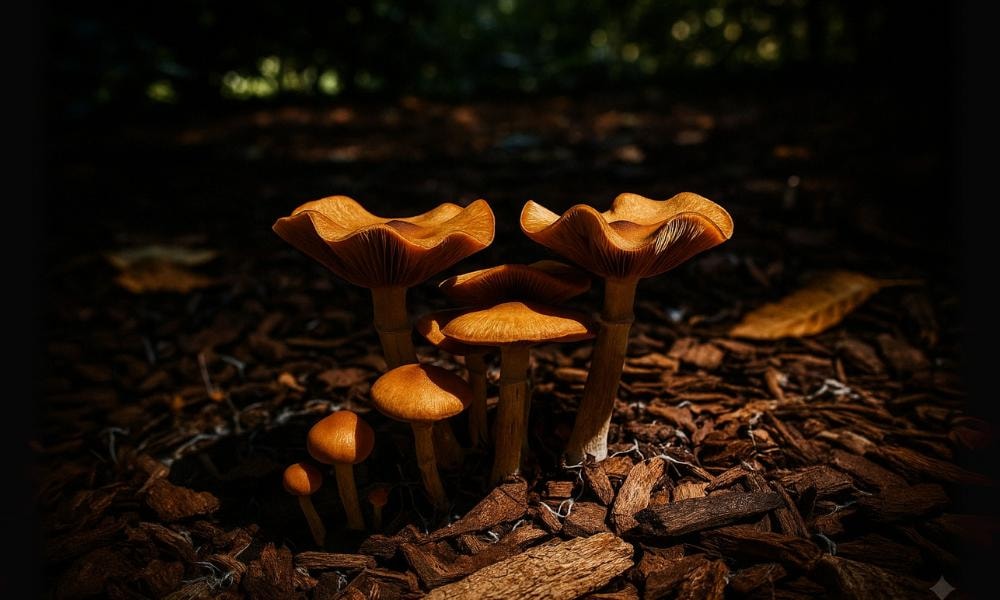
Psilocybe cyanescens shows a strong preference for wood-based substrates. In nature, you’ll find them thriving on rotting wood, wood chips, mulched garden beds, and occasionally on sawdust piles. They’re particularly fond of coniferous wood debris but will colonize hardwood chips as well.
The Pacific Northwest—especially Washington, Oregon, and British Columbia—provides ideal climate conditions. Cool, moist autumns trigger prolific fruiting. Urban and suburban areas with landscaping mulch have become hotspots for wavy cap discoveries.
Originally described in England, the species has established populations across southern Britain and is spreading northward. It’s now considered an introduced species in both North America and parts of Europe, though its original native range remains debated among mycologists.
Parks, botanical gardens, university campuses, and residential landscaping provide perfect microhabitats. The species shows remarkable adaptability to human-modified environments—anywhere fresh wood chips are regularly applied.
Deadly Lookalikes: How to Avoid Fatal Mistakes
This section could save your life. Several toxic species share superficial similarities with wavy caps. For example, Galerina marginata is a deadly poisonous mushroom that can be mistaken for wavy caps due to its similar size and shape. Galerina species often have a caramel brown cap, which can lead to confusion with P. cyanescens and other lookalikes.
When identifying mushrooms, taking a spore print is essential. Different colored spores are a key identification feature when distinguishing between similar species, as spore color can help prevent dangerous misidentification when visual cues are not enough.
Funeral Bell vs. Wavy Cap
The most dangerous lookalike is Galerina marginata, commonly called the funeral bell or deadly Galerina. This species contains amatoxins—the same lethal compounds found in death cap mushrooms—and has caused numerous fatalities.
Critical differences: Galerina marginata has a rusty brown spore print (versus dark purple-brown for wavy caps) and stems that stain brown-black when bruised (versus blue-green). The funeral bell’s cap margins are typically straight rather than wavy, and it lacks the robust blue bruising reaction.
According to the University of British Columbia’s Beaty Biodiversity Museum, the stem color differentiation is crucial: wavy caps bruise blue, while deadly Galerina develops black discoloration. This single feature has saved countless lives.
Both species grow on wood substrates and fruit in similar seasons, making habitat alone an unreliable identification method. You must perform a spore print to differentiate them confidently.
Other Species to Watch For
Hypholoma fasciculare (sulphur tuft) grows in similar habitats but has yellow gills that never turn purple-brown. It’s toxic but not deadly. Cortinarius species can also cause confusion—many are dangerously nephrotoxic (kidney-damaging).
Leratiomyces ceres (formerly Stropharia aurantiaca) shares the wood chip habitat but displays bright orange-red caps and lacks blue bruising. Other Psilocybe species like P. cubensis may bruise blue but grow on dung substrates rather than wood.
The golden rule: when in doubt, throw it out. No microscopy study is worth risking your health over uncertain identification.
Spore Prints & Microscopy Details
For researchers and mycology enthusiasts, spore examination provides definitive identification. Accurate identification often requires examination of microscopic or molecular characters, especially within the cyanescens species complex.
Spore size and shape are critical for distinguishing species, particularly within the psilocybe cyanescens complex, which includes several closely related species that are difficult to distinguish without microscopic or molecular analysis. The cyanescens complex is defined by shared morphological and genetic features, making microscopic or molecular characters essential for accurate identification.
When analyzing spore prints, cyanescens specimens are best confirmed through a combination of spore print analysis and microscopic examination. This approach helps ensure correct identification within the cyanescens species complex.
Spore Size & Shape
Under microscope, wavy cap spores measure 9-12 x 5.5-7 micrometers. They’re elliptical in shape, smooth-walled, and feature a small apical germ pore. The spores appear dark purple-brown in mass but show a lighter brownish-purple color when viewed individually under magnification.
Advanced researchers note the absence of chrysocystidia on gill faces—a technical feature that helps distinguish P. cyanescens from similar species within the genus.
Creating Your Own Spore Print
Making a spore print is straightforward: remove the cap, place it gill-side down on white paper, cover with a glass, and wait 4-8 hours. Wavy caps produce a very dark purple-brown to purple-black print.
For researchers interested in microscopy study, professionally prepared spore prints offer consistent quality and legal compliance for research purposes.
Seasonal Timing: When to Find Wavy Caps
Timing your research collection requires understanding seasonal fruiting patterns. Fruiting typically occurs in response to specific environmental cues such as temperature and moisture.
Regional differences are important to note: North American fruiting bodies and European fruiting bodies of Psilocybe cyanescens can differ in potency and chemical composition. Cyanescens fruits are known for their high psilocybin content and distinctive appearance, making them significant for both recreational use and scientific study.
Environmental triggers play a crucial role in successful mushroom collection. Cultivation fruiting requires careful control of temperature and humidity to simulate natural conditions.
Cultivation fruiting begins when these environmental conditions are met, whether indoors or outdoors.
Peak Months by Region
In the Pacific Northwest, wavy caps fruit prolifically from September through early December, with peak abundance in October and November. The season extends later in milder coastal areas compared to inland regions.
European populations show similar autumn timing, though British specimens may appear as early as late August in warm years. The season typically concludes with the first hard freezes.
California populations fruit later—often peaking in December and January—reflecting the state’s delayed rainy season.
Temperature & Weather Triggers
Fruiting requires specific environmental triggers. Temperatures between 50-65°F (10-18°C) combined with consistent moisture stimulate fruiting body formation. Heavy rains followed by cool, humid conditions create ideal scenarios.
Mycelium can survive freezing temperatures, but active fruiting ceases once temperatures drop below 40°F (4°C). Multiple flushes often occur when autumn weather provides repeated wet-dry cycles.
Research Applications & Spore Products
The scientific community maintains strong interest in Psilocybe cyanescens for multiple research applications. Psilocybe cyanescens is a psilocybe mushroom of significant interest due to its psychoactive compounds.
Psilocybe mushrooms, including wavy caps, are studied for their unique psychoactive and medicinal properties. Research often focuses on the psychoactive compounds present in these psychedelic mushrooms, particularly all the psychoactive compounds found in Psilocybe cyanescens, such as psilocybin, psilocin, and baeocystin. The primary compounds psilocybin and psilocin are responsible for the mushroom’s effects.
Wood-Lovers Paralysis, a phenomenon sometimes associated with these mushrooms, is observed in several psychedelic mushrooms.
Legal spore study is a common approach for researchers, and medicinal mushrooms are also studied for their potential health benefits.
With proper environmental controls, it is possible to produce fruits indoors for research purposes.
Wood-Lovers Paralysis (WLP)
A fascinating phenomenon unique to wood-inhabiting Psilocybe species: some individuals report temporary muscle weakness or paralysis after consumption. Researchers have documented this “Wood-Lovers Paralysis” primarily in P. cyanescens, P. azurescens, and related species.
The mechanism remains poorly understood. Some researchers hypothesize it may relate to aeruginascin content or other alkaloids beyond psilocybin/psilocin. This area represents an important frontier for mycological research.
Psilocybin Content & Potency
Genomic studies have mapped the psilocybin biosynthetic gene cluster in Psilocybe species, revealing evolutionary pathways for these compounds. Wavy caps consistently rank among the most potent naturally occurring psilocybin mushrooms.
For legal research purposes, spore specimens allow microscopy study and taxonomy research without legal complications. Educational institutions and amateur mycologists can study spore morphology, genetic diversity, and identification techniques.
Research Disclaimer: Psilocybin-containing mushroom spores are legal for microscopy and taxonomy research in most jurisdictions. However, cultivation and consumption of psilocybin mushrooms remain illegal in most areas. This information is provided for educational and scientific research purposes only. Always check your local laws and regulations.
Legal Status & Safety Warnings
Understanding the legal landscape is essential for researchers and mycology enthusiasts.
In the United States, psilocybin and psilocin are Schedule I controlled substances under federal law. However, many laws do not cover naturally occurring plants and fungi, which affects the regulation of Psilocybe cyanescens. International conventions often do not cover naturally occurring plants containing psychoactive compounds, so Psilocybe cyanescens and similar fungi are not specifically regulated under these treaties. Spores do not contain these compounds and remain legal for microscopy purposes in most states. Cyanescens spores are generally legal to possess in many regions, as they do not contain psychoactive compounds. It is legal to possess spores in most jurisdictions unless there is intent to cultivate. Several cities and states have decriminalized possession, but cultivation remains illegal federally.
The United Kingdom lists psilocybin mushrooms as Class A controlled substances, though enforcement focuses primarily on cultivation and distribution rather than wild foraging for personal study.
Canada maintains similar restrictions, with psilocybin listed as a Schedule III drug. Recent policy shifts have allowed some therapeutic research and exemptions.
For those interested in mycological study, working with legal specimens and spore prints provides a safe, compliant pathway to explore this fascinating species. Many researchers contribute to taxonomy, ecological studies, and microscopy work without crossing legal boundaries. Psilocybe cyanescens mycelium and cyanescens mycelium can be studied for their unique properties in research settings.
The wavy cap mushroom represents one of nature’s most intriguing fungi—beautiful, potent, and worthy of serious scientific study. The genus Psilocybe includes many psychoactive species, with Psilocybe cyanescens being one of the most notable. Psilocybe cyanofriscosa is a closely related species with similar morphology, and other related species within the genus Psilocybe, such as P. azurecens and P. allenii, share close phylogenetic relationships. Whether you’re examining spore morphology, studying habitat preferences, or contributing to mycological databases, always prioritize safety, accurate identification, and legal compliance in your research endeavors.
For beginners interested in mycology, starting with legal spore study provides a foundation for understanding fungal taxonomy and identification techniques. Many successful mycologists began their journey with microscopy and spore print analysis before advancing to field identification and ecological research. The wavy cap’s distinctive features, such as the tendency of its tissues to stain blue when bruised, make it an excellent species for developing these fundamental skills.
