

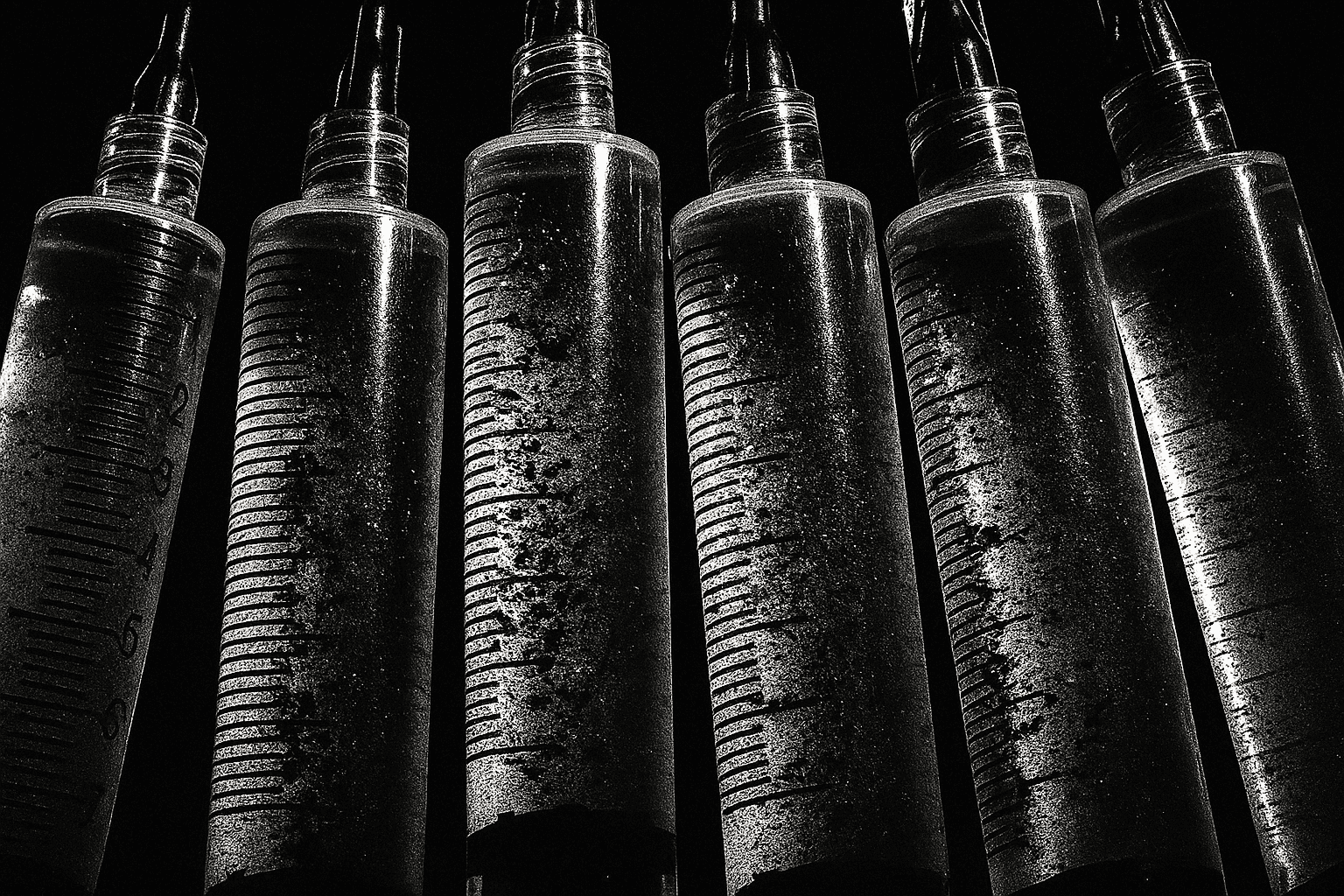
Alright, let’s cut through the confusion. You’re standing at the crossroads of mushroom cultivation, wallet in hand, wondering whether to grab a spore syringe or dive into the liquid culture game. I get it—the forums are a minefield of conflicting advice, and everyone’s got an opinion. Let me break this down for you, no BS, just straight facts from someone who’s seen it all in the mycology world.
The Real Difference: Spores vs Living Mycelium
Here’s the deal—spore syringes and liquid cultures are fundamentally different beasts. A spore syringe is like a packet of seeds. You’ve got millions of microscopic spores suspended in sterile water, each one a genetic lottery ticket waiting to germinate. Liquid culture? That’s already germinated, living mycelium swimming in a nutrient solution. It’s the difference between planting seeds and transplanting a thriving seedling. According to research published in Frontiers in Microbiology, this fundamental difference in starting material significantly impacts colonization rates and growth kinetics.
For our sacred strain enthusiasts working with Golden Teacher spores or Penis Envy spores, you’re looking at spore syringes for microscopy research (wink wink, legal compliance). But for those diving into gourmet cultivation with our Blue Oyster or Shiitake liquid cultures, you’re getting a head start that’ll blow your mind.
Speed: The Game-Changing Factor
Let’s talk numbers, because that’s what really matters when you’re watching jars like a hawk. Liquid culture colonizes substrate in 10-14 days. Spore syringes? You’re looking at 21-28 days minimum, sometimes longer if the spores are feeling lazy. That’s literally twice as fast with LC.
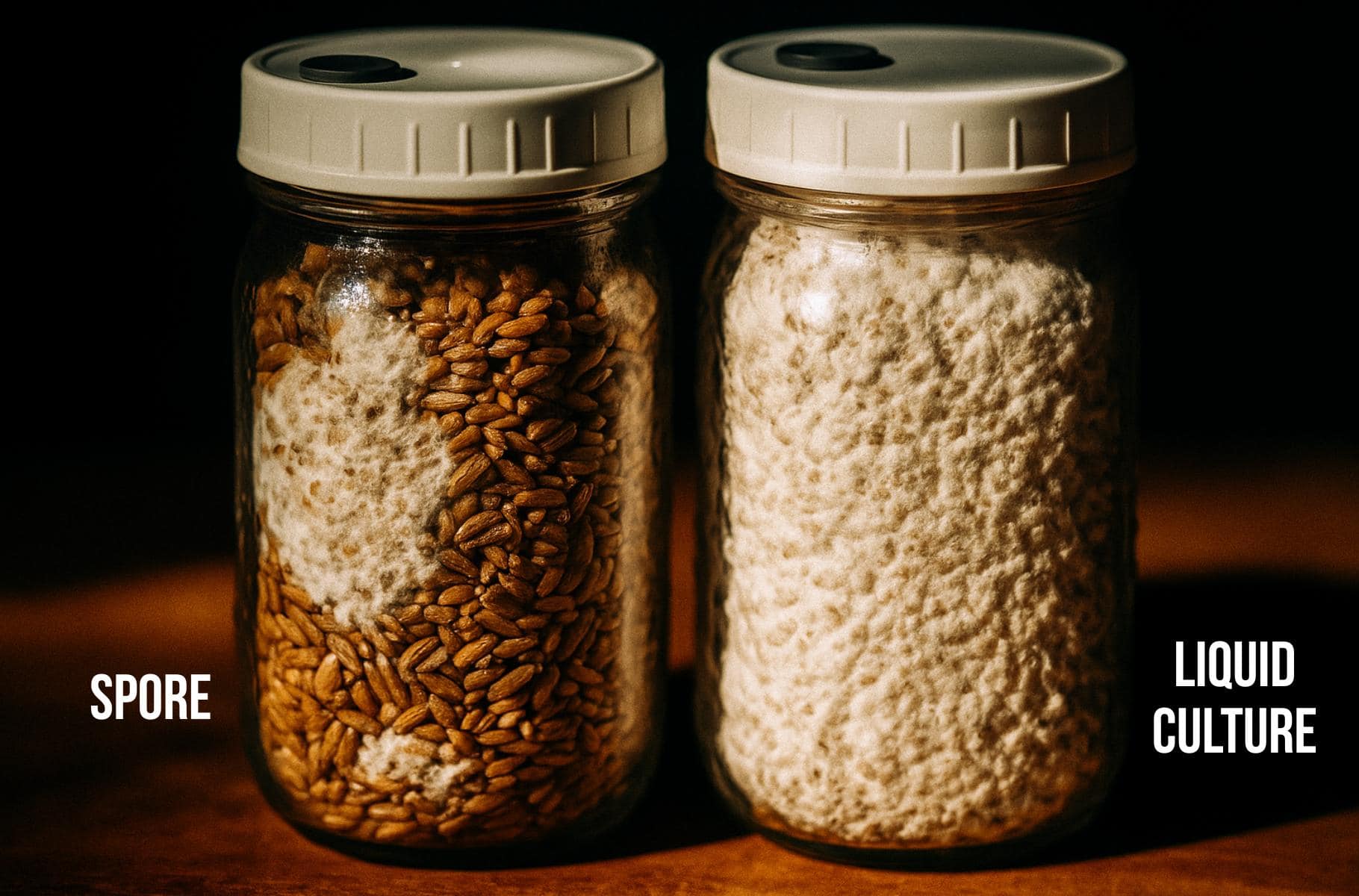
Why the massive difference? Simple. Spores need to find each other, mate up, and then start growing. It’s like a microscopic dating game that takes time. Liquid culture skips all that drama—it’s already living mycelium ready to feast on your grain. Research on spore germination mechanisms shows that breaking dormancy and initiating growth involves complex biochemical processes that can take 3-7 days before visible growth begins.
Contamination: The Silent Killer
Here’s where things get spicy. Everyone thinks spore syringes are riskier for contamination, and they’re not wrong—but it’s more nuanced than that. Spore syringes can carry 10-30% contamination risk if you’re sloppy with sterile technique. But here’s the kicker: you can SEE contamination easier with spores because it develops alongside your mycelium.
Liquid culture? When it’s clean, it’s golden—maybe 5% contamination risk under good conditions. But if your LC is dirty, you might not know until you’ve inoculated 20 jars and they all turn green. It’s like playing Russian roulette with better odds but higher stakes.
Genetics: The Wild Card vs The Sure Thing
This is where it gets philosophical. Every spore syringe is a genetic grab bag. You might get fast colonizers, slow pokes, big fruits, or tiny pins—it’s nature’s lottery. For researchers studying phenotype variation, this genetic diversity is exactly what you want. A study on mycelial growth rates in edible fungi found that spore-derived cultures can exhibit significant variation in growth rates and substrate preferences.
Liquid culture from a cloned mushroom? That’s genetic consistency on tap. Every jar will perform identically, giving you predictable yields and characteristics. For commercial cultivators growing Reishi or Cordyceps, this consistency is money in the bank.
Spore Syringe vs Liquid Culture: The Ultimate Comparison Chart
| Feature | Spore Syringe | Liquid Culture |
|---|---|---|
| What It Is | Dormant spores in sterile water | Living mycelium in nutrient solution |
| Colonization Speed | 21-28 days (slow) | 10-14 days (fast) |
| Contamination Risk | 10-30% (easier to detect) | 5% if clean (harder to detect) |
| Genetic Consistency | Variable (genetic lottery) | Consistent (cloned genetics) |
| Shelf Life | 6-12+ months | 1-6 months |
| Storage Requirements | Flexible (room temp or fridge) | Strict (2-8°C only) |
| Cost Per Jar | ~$1.33 (fixed) | ~$0.40 (if expanded) |
| Best For Beginners | Yes (forgiving, legal for sacred strains) | Yes (faster results, less contamination) |
| Legal Use Cases | Microscopy research (sacred strains) | Cultivation (gourmet/medicinal only) |
| Expansion Potential | Limited (must grow out first) | Unlimited (direct expansion) |
Storage and Shelf Life: The Practical Reality
Let’s get real about storage. Spore syringes are the preppers’ choice—6-12 months shelf life, sometimes years if stored properly. Toss them in the fridge and forget about them. They’re like the dried beans of the mushroom world. GroCycle’s cultivation guide confirms that properly stored spores can remain viable for years, while liquid cultures require more careful temperature control.
Liquid cultures are more like fresh produce. You’ve got 1-6 months max, and they’re fussy about temperature. Too hot? Dead. Too cold? Also dead. They need that Goldilocks zone of 2-8°C, and even then, they’re slowly declining in vigor.
Pro tip: If you’re the type who buys supplies and then procrastinates for months, stick with spore syringes. If you’re ready to rock immediately, liquid culture is your fast track to success.
The Beginner’s Dilemma: Which Path to Choose?
New to the game? Here’s my controversial take: start with liquid culture for gourmet species. Yeah, I said it. The faster colonization means less time for things to go wrong, and you’ll see results that keep you motivated. Our Blue Oyster liquid culture is practically bulletproof for beginners.
But if you’re drawn to the sacred strains for “research purposes,” you’re working with spore syringes by necessity. That’s the legal landscape, folks. Embrace the slower journey—it builds character and teaches patience.
Cost Analysis: The Long Game
Let’s talk money, because nobody else seems to address this properly. Spore syringes typically run $15-25 and can inoculate 10-20 jars. Liquid cultures cost about the same but can be expanded infinitely if you know what you’re doing. One LC syringe can become gallons of liquid culture with basic skills.
Here’s the math nobody tells you:
– Spore syringe: $20 ÷ 15 jars = $1.33 per jar
– Liquid culture (expanded): $20 → 50+ jars = $0.40 per jar
But there’s a catch—you need the skills and equipment to expand LC properly. For one-and-done grows, spores might be more economical.
Advanced Techniques: When Each Method Shines
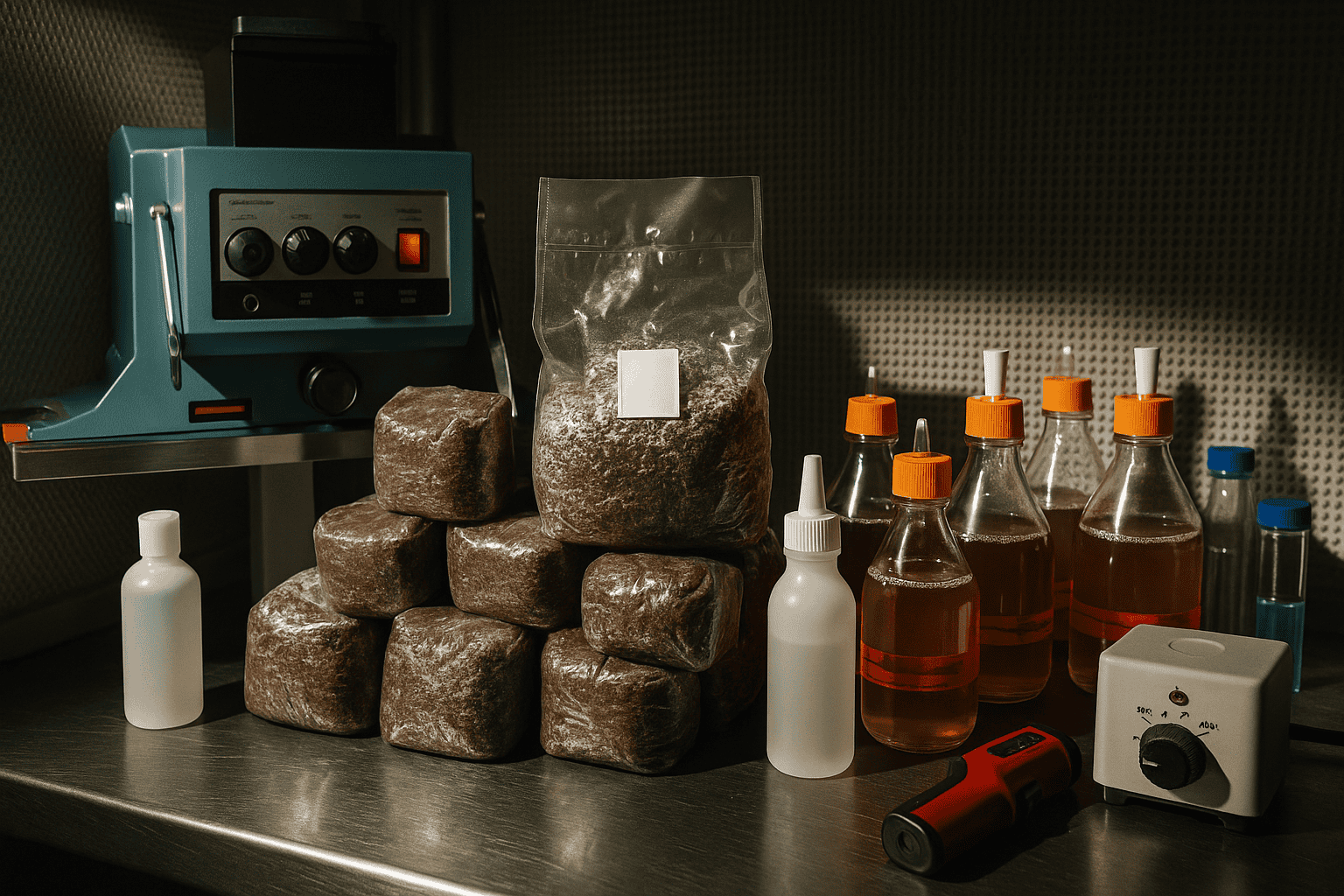
Spore syringes excel when you’re:
– Hunting for unique genetics
– Starting a breeding project
– Working within legal frameworks for sacred strains
– Storing long-term for future projects
– Teaching microscopy and spore identification
Liquid cultures dominate when you’re:
– Production growing for consistency
– Racing against time for quick harvests
– Scaling up commercial operations
– Working with slow-growing species like Reishi
– Minimizing contamination windows
The Verdict: It’s Not Either/Or
Here’s the truth bomb—successful cultivators use both. Spore syringes for genetic exploration and compliance, liquid cultures for production speed and reliability. It’s not about choosing sides; it’s about using the right tool for the job. Professional cultivators typically maintain both spore banks and liquid culture libraries for different purposes.
At Fungushead, we’ve structured our entire catalog around this reality. Sacred strains come as spore syringes for microscopy research (remember, cultivation of psilocybin-containing mushrooms is illegal in most jurisdictions). Gourmet and medicinal species? We’re slinging liquid cultures that’ll have you harvesting in record time.
Making Your Decision: The Framework
Still confused? Here’s your decision tree:
Choose spore syringes if:
– You’re researching sacred strains (legal requirement)
– You want genetic variety
– You’re not in a rush
– You plan to store them for months
– You’re interested in breeding projects
Choose liquid culture if:
– You’re growing gourmet/medicinal species
– Speed is crucial
– You want consistent, predictable results
– You’re ready to use them within 1-3 months
– You have basic sterile technique down
Final Thoughts: Embrace the Journey
Look, whether you’re squirting spores or shooting LC, you’re embarking on one of nature’s most fascinating journeys. Each method has its place in the cultivator’s toolkit. Don’t let analysis paralysis stop you from starting.
The mushroom world rewards action over perfection. Grab what makes sense for your situation, follow sterile technique like your life depends on it, and remember—every master cultivator started exactly where you are now.
Ready to dive in? Check out our full selection of spore syringes for research and liquid cultures for cultivation. And hey, if you’re still scratching your head, our Clean Culture Guarantee has your back.
Remember: stay curious, stay sterile, and keep pushing those fungal boundaries.
Happy cultivating (or researching),
— The Fungushead Crew
