

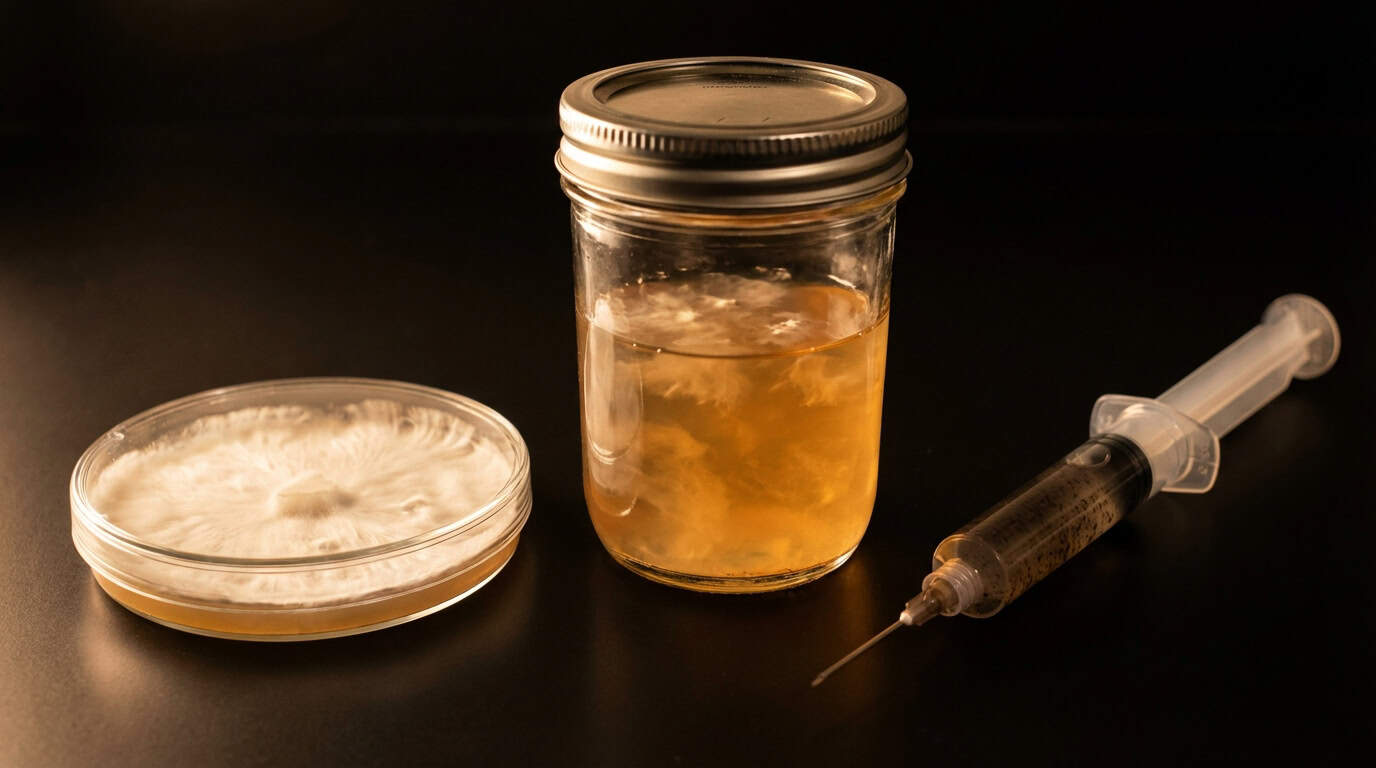
You’re standing in front of your first mushroom cultivation setup, ready to inoculate your grain jars. But wait—should you grab a spore syringe, prepare an agar plate, or invest in liquid culture? If you’ve spent any time researching mushroom cultivation, you’ve probably encountered fierce debates about which inoculation method reigns supreme. Here’s the truth: there’s no single “best” method. Each approach—spore syringes, agar plates, and liquid culture—serves different purposes in your cultivation journey. Understanding when and how to use each method can mean the difference between successful flushes and contaminated failures.
Understanding the Three Inoculation Methods
Before diving into comparisons, let’s establish what we’re actually talking about. These three methods represent different stages of mushroom genetics, each with distinct characteristics and applications.
What Are Spore Syringes?
Spore syringes contain millions of microscopic spores suspended in sterile water. Think of them as nature’s genetic lottery ticket—each syringe holds countless combinations of mushroom genetics.
When you use a spore syringe, you’re essentially scattering diverse genetics that need to germinate and find compatible mates before growing. This process takes time but offers incredible genetic variety.
What Are Agar Plates?
Agar plates are sterile dishes filled with nutrient gel that supports fungal growth. They’re the quality control checkpoint of mushroom cultivation.
On agar, you can visually observe mycelium growth, identify contamination early, and isolate the strongest genetics for propagation. It’s like having a magnifying glass for your mushroom cultures.
What Is Liquid Culture?
Liquid culture consists of living mycelium suspended in a nutrient solution. Unlike spores, this is actively growing fungal tissue ready to colonize immediately.
According to North Spore’s mycology lab guide, liquid culture colonizes substrates in a matter of days rather than weeks. That speed comes with trade-offs we’ll explore below.

Spore Syringes: The Beginner’s Starting Point
Most cultivators start their journey with spore syringes, and for good reason. They’re legal in most jurisdictions for microscopy research, widely available, and require minimal equipment to use.
How Spore Syringes Work
When you inoculate grain with a spore syringe, those microscopic spores must first germinate into individual hyphae. Then, compatible hyphae find each other and fuse in a process called plasmogamy. Only after this fusion can vigorous mycelial growth begin.
This germination and mating process typically takes 7-14 days before you see visible colonization. According to research on spore syringe contamination risks, spores can’t be sterilized without killing them, which means you’re always introducing some contamination risk.
Germination Timeline and Process
Expect this timeline when working with spore syringes: Days 1-7 show little to no visible activity as spores germinate. Days 7-14 reveal the first white wispy mycelium at inoculation points. Days 14-28 bring full colonization of grain jars, though timing varies by species and conditions.
Temperature matters immensely. Most Psilocybe cubensis spores germinate best at 75-80°F, while gourmet species like oyster mushrooms prefer slightly cooler ranges.

Pros and Cons of Spore Syringes
Advantages: Legal status for microscopy research in most states makes spore syringes accessible. Long shelf life of 8-12 months refrigerated provides flexibility. Genetic diversity creates opportunities for discovering unique phenotypes. Low initial cost makes them beginner-friendly.
Disadvantages: Slow colonization times test your patience. Contamination risk increases since spores carry environmental microorganisms. Unpredictable outcomes mean each syringe produces different results. No quality control exists—you can’t see what you’re working with until growth appears.
For cultivators interested in creating their own supplies, our guide on how to make a spore syringe covers the complete process.
Agar Plates: The Quality Control Standard
If spore syringes are the lottery ticket, agar plates are your cultivation laboratory. This is where serious growers separate themselves from casual hobbyists.
How Agar Plates Work
Agar provides a nutrient-rich, transparent medium where mycelium grows visibly across the surface. As described in the University of Florida’s fungal cultivation guide, potato dextrose agar sterilized at 15 PSI for 30 minutes creates ideal conditions for mushroom tissue culture.
You can transfer tissue from a mushroom, germinate spores, or expand existing cultures onto agar. Within days, growth patterns emerge that tell you everything about culture health and vigor.
Isolation and Genetic Selection
Here’s where agar truly shines: genetic isolation. When spores germinate on agar, you see distinct sectors of growth representing different genetic combinations. Some sectors grow fast and rhizomorphic (rope-like), while others appear wispy and slow.
You can transfer the strongest-performing sector to fresh agar, essentially cloning those superior genetics. After 2-3 transfers, you’ve created a monoculture—genetically identical mycelium that produces consistent results.

Pros and Cons of Agar Plates
Advantages: Visual contamination detection catches problems immediately. Genetic isolation produces consistent, high-performing cultures. Long-term storage on slants preserves genetics for years. Quality control ensures you’re working with clean, vigorous mycelium.
Disadvantages: Steeper learning curve intimidates beginners. Equipment requirements include pressure cooker, still air box or flow hood, and glass petri dishes. Time investment for isolation work adds 2-4 weeks to your timeline. Sterile technique demands precision and practice.
Research on bacterial contamination in fungal cultures demonstrates why agar work matters—contamination removal becomes exponentially easier when you can visually identify and isolate clean growth.
Liquid Culture: Speed and Consistency
Liquid culture represents the advanced cultivator’s secret weapon. Once you master this method, colonization times drop dramatically and success rates soar.
How Liquid Culture Works
Liquid culture suspends living mycelium in a nutrient solution—typically a 4% sugar-to-water ratio as outlined in our liquid culture recipe guide. The mycelium fragments into countless pieces that colonize grain spawn in 3-7 days.
Unlike spores that must germinate and mate, liquid culture hits the ground running. You’re inoculating with actively growing tissue that immediately begins spreading through your substrate.
Colonization Advantages
The speed difference is dramatic. Where spore syringes take 14-28 days for full colonization, liquid culture often completes the job in 5-10 days. This faster colonization reduces contamination windows and gets you to harvest more quickly.
According to ATCC’s mycology culture standards, proper handling and storage of living fungal cultures requires attention to temperature, pH, and contamination prevention protocols.

Pros and Cons of Liquid Culture
Advantages: Blazing fast colonization cuts weeks from your timeline. Consistent genetics from cloned tissue produce predictable results. Efficient distribution means one jar inoculates dozens of grain bags. Easier quality assessment through visual inspection of solution clarity.
Disadvantages: Shorter shelf life of 1-2 months requires planning. Contamination invisibility hides bacterial growth until it’s too late. Preparation complexity demands sterile technique and proper nutrient balance. Higher initial investment in jars, lids, and ingredients.
Storage matters significantly with liquid culture. Refrigeration extends viability, but even properly stored cultures degrade faster than spore syringes or agar slants.
Side-by-Side Comparison: Which Method Wins?
Let’s break down the hard numbers so you can make an informed choice based on your specific situation and goals.
Speed, Cost, and Contamination Showdown
Colonization Speed: Spore syringes take 14-28 days. Agar plates take 7-14 days (plus isolation time). Liquid culture takes 3-7 days. Winner: Liquid culture by a landslide.
Contamination Risk: Spore syringes carry the highest risk since spores can’t be sterilized. Agar plates offer the lowest risk with visual quality control. Liquid culture falls in the middle—clean to start but impossible to verify without microscope. Winner: Agar plates for contamination detection.
Initial Cost: Spore syringes run $15-25 per syringe. Agar supplies cost $50-100 for basic setup. Liquid culture requires $30-60 in jars and ingredients. Winner: Spore syringes for accessibility.
Shelf Life: Spore syringes last 8-12 months refrigerated. Agar slants last years when properly sealed. Liquid culture lasts 1-2 months maximum. Winner: Agar slants for long-term storage.
Genetic Consistency: Spore syringes offer maximum diversity (different every time). Agar isolation creates monoculture (identical results). Liquid culture from isolated agar maintains consistency. Winner: Agar isolation for predictable genetics.
The Optimal Workflow: Using All Three Together
Here’s the secret successful cultivators understand: you don’t choose one method over the others. You use all three in a strategic workflow that leverages each method’s strengths.
Start with a spore syringe to introduce new genetics. Germinate those spores on agar plates where you can observe and select the strongest growth patterns. Transfer your best isolated culture to liquid culture for rapid expansion. Use that liquid culture to inoculate grain spawn for bulk grows.
This workflow gives you the genetic diversity of spores, the quality control of agar, and the speed of liquid culture. You’re not limited by any single method’s weaknesses because you’re combining all three strengths.
For beginners, our top 5 mushrooms for beginners guide recommends starting with spore syringes of forgiving species like oyster mushrooms or golden teacher cubensis. Once you’ve completed a few successful grows, graduate to agar work for quality improvements.
The complete cultivation workflow looks like this: Purchase spore syringe → Germinate on agar → Isolate strong growth → Transfer to liquid culture → Inoculate grain spawn → Fruit mushrooms → Take tissue sample back to agar. This cycle creates a self-sustaining system where you’re constantly improving genetics and reducing costs.

Contamination Detection Guide for Each Method
Spotting contamination early saves entire grows. Each method shows different warning signs that demand immediate attention.
Spore Syringe Contamination: Cloudy solution with visible particles suggests bacterial growth. Foul odors when opening indicate spoilage. Premature mycelium growth inside syringe means contamination. Green, black, or orange colors signal mold spores.
Agar Plate Contamination: Bacterial growth appears wet, slimy, and fast-spreading. Mold shows fuzzy texture in green, black, or gray colors. Contaminated sectors grow faster than mycelium initially. Sour or alcoholic smells indicate bacterial colonies.
Liquid Culture Contamination: Cloudiness without mycelial growth suggests bacteria. Foul odors are the clearest warning sign. Jar pressurization indicates gas-producing contaminants. Any color besides white mycelium means trouble.
The key is catching problems early. With agar, you can simply transfer clean growth away from contamination. With liquid culture or grain, contamination typically means complete loss. This is why many cultivators consider agar essential for long-term success—it’s your contamination insurance policy.
For comprehensive guidance on avoiding these pitfalls, check out our complete mycology guide covering sterilization, technique, and troubleshooting.
Which Method Should You Choose?
Your choice depends entirely on your current skill level, available equipment, and cultivation goals.
Choose spore syringes if: You’re a complete beginner wanting to start immediately. You value genetic diversity and experimentation. You’re working with species where spores are readily available. You want the lowest barrier to entry.
Choose agar plates if: You’re serious about long-term cultivation. You want to isolate and preserve superior genetics. You can invest in basic lab equipment. You value quality control over quick results. You’re willing to learn proper sterile technique.
Choose liquid culture if: You need fast colonization for production grows. You’ve already isolated clean genetics on agar. You’re scaling up from hobbyist to serious grower. You understand contamination risks and mitigation.
The honest answer for most cultivators? Start with spore syringes to learn the basics. Add agar plates once you understand the lifecycle. Incorporate liquid culture when speed and consistency matter more than cost. This progression builds skills progressively while managing complexity.
Many successful growers maintain all three in their cultivation toolkit. They use spore syringes for genetic diversity and exploring new species. They rely on agar for isolation and long-term storage. They employ liquid culture for production runs where speed matters.
All cultivation materials mentioned are sold strictly for microscopy, research, and educational purposes. Cultivating psilocybin-containing mushrooms remains illegal under federal law. Always verify your local and state regulations before purchasing or working with any mushroom genetics.
Your Next Steps in Mushroom Cultivation
You now understand the fundamental differences between spore syringes, agar plates, and liquid culture. Each method serves distinct purposes in a well-rounded cultivation practice.
The path forward? Start where you are. If you’re brand new, grab a spore syringe of a beginner-friendly species and make your first inoculation. Once you’ve seen mycelium colonize grain, you’ll understand why cultivators become passionate about optimization.
Ready to begin your cultivation journey? Browse our selection of premium spore syringes, explore our existing spore syringe versus liquid culture comparison, or dive into the world of agar work. The fascinating world of mycology awaits—one inoculation at a time.
