

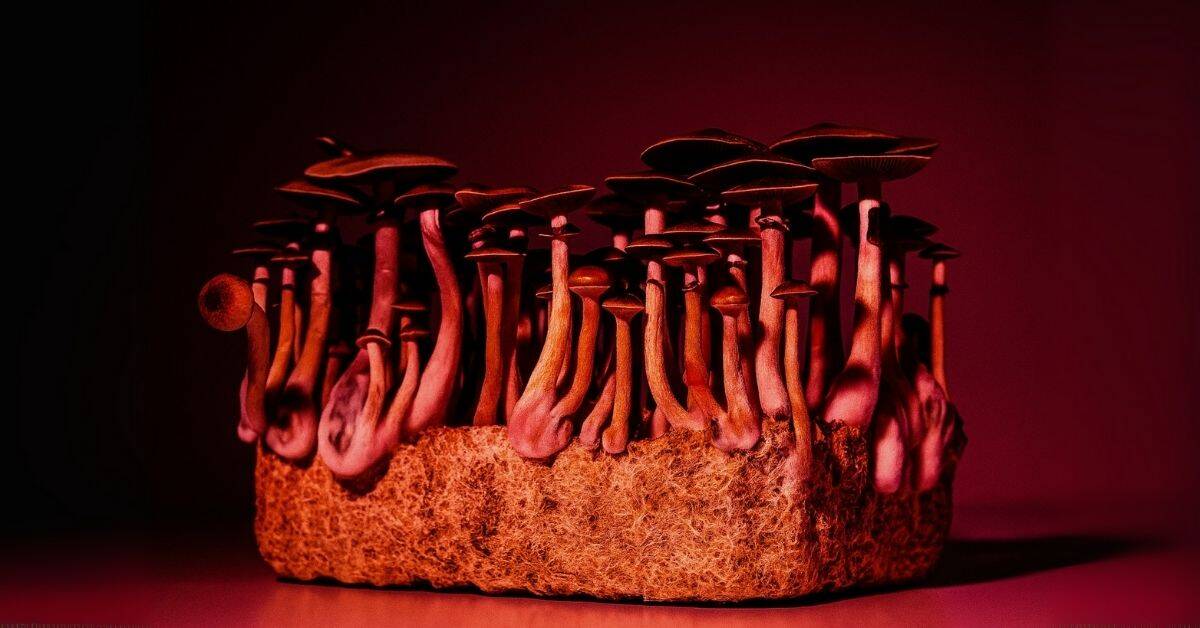
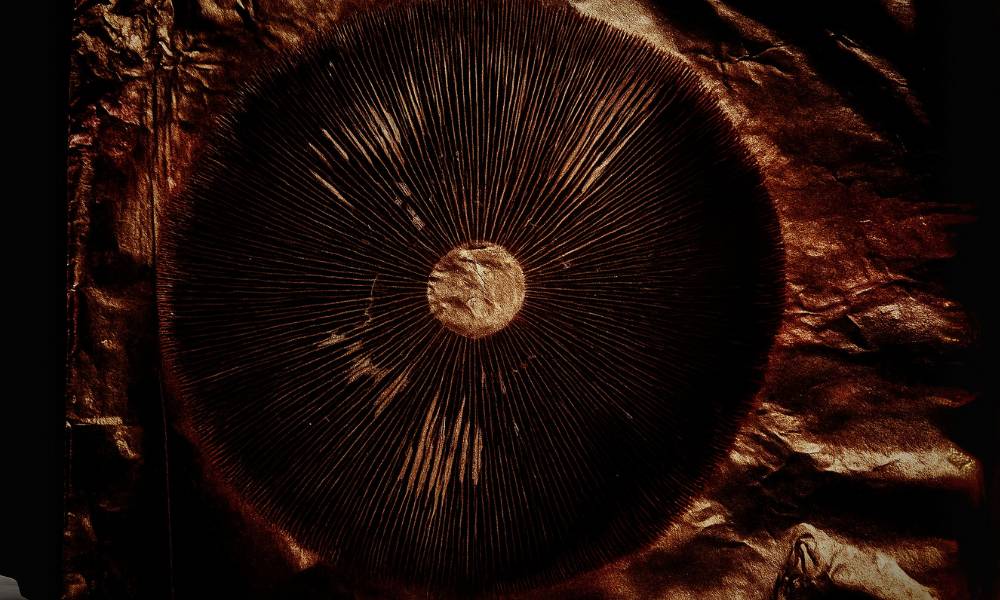
You’re walking through a massive cow pasture in central Florida—1,000 acres of prime cattle country. It’s late summer, humidity near 95%, and the afternoon thunderstorms just passed. Then you spot it: a cluster of caramel-colored mushrooms with dark, almost purple-black gills that leave a stunning spore print looking like nature’s own purple-black ink. That’s your first encounter with Purple Mystic, a Psilocybe cubensis variety that earned its mystical name from those gorgeous dark spore deposits. This strain was originally discovered in East Plant City, FL, where it was found growing wild in local pastures.
After it was found, a dedicated cultivator isolated and stabilized the strain, ensuring its unique characteristics were preserved for the community. In this guide, we’re covering everything from taxonomic classification to spore microscopy characteristics, visual identification features, and why this strain challenges even experienced cultivators. The growing popularity of Purple Mystic within the mycology community is a testament to its rapid rise, widespread recognition, and high regard among cultivators.
What is Purple Mystic Mushroom?
Purple Mystic is a community-recognized variety of Psilocybe cubensis, the most widely cultivated sacred mushroom species on Earth. As a distinctive purple mystic strain within the broader group of cubensis strains, it is known for its unique purple ringed caps, dark spores, and stable, uniform growth characteristics. But here’s something critical to understand right from the start: “Purple Mystic” isn’t a scientifically validated strain with peer-reviewed genetic authentication. According to DNA authentication research published in PubMed Central, the mushroom cultivation community experiences widespread mislabeling issues, with studies showing approximately 13% misidentification rates across fungal collections. Strain names like “Purple Mystic,” “Golden Teacher,” or “Penis Envy” represent community conventions rather than distinct taxonomic classifications. That doesn’t make Purple Mystic any less fascinating—it just means we approach it with scientific honesty about what “strain” really means in this context.
Taxonomic Classification
Kingdom: Fungi
Division: Basidiomycota
Class: Agaricomycetes
Order: Agaricales
Family: Hymenogastraceae
Genus:Psilocybe
Species:Psilocybe cubensis
Variety: Purple Mystic (community designation)
The mycology community plays a key role in designating and recognizing varieties like Purple Mystic, reflecting the collective efforts of enthusiasts and researchers. Like its close cousin Golden Teacher, Purple Mystic shares the fundamental characteristics of all P. cubensis specimens: dark purple-black spore prints, distinctive blue bruising when handled, and preference for dung-enriched substrates.
Key Identifying Characteristics
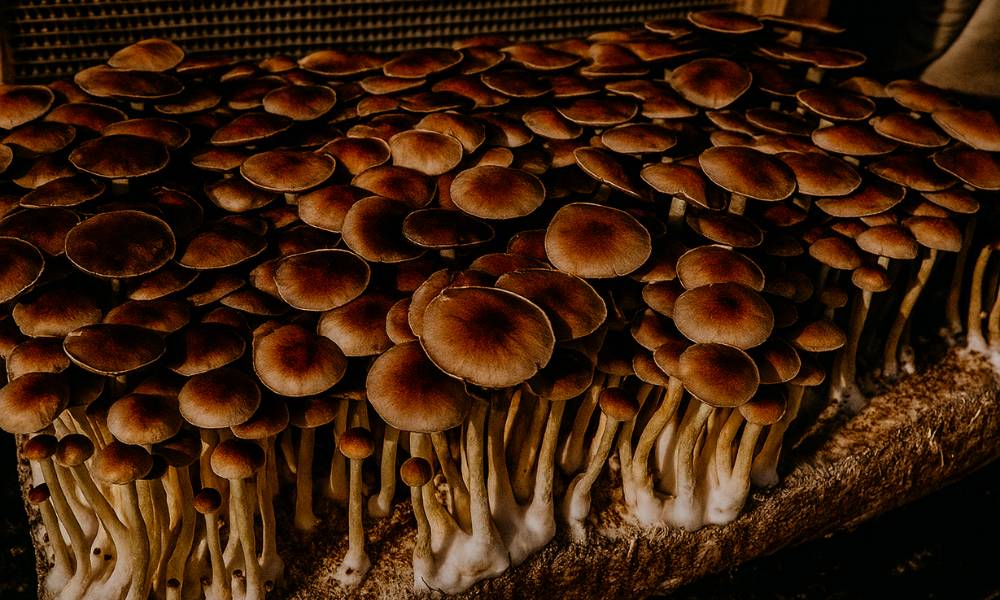
Purple Mystic displays standard Psilocybe cubensis morphology with one standout feature: particularly dark purple-black spore prints. The name “Purple Mystic” celebrates this trait—those deep purple spore deposits that collectors and researchers find especially striking. Cap size typically ranges from 2-5 centimeters in diameter, though mature specimens occasionally reach up to 8 centimeters. Purple Mystic is identifiable by its large brown caps, which fade to cream as they mature, making its visual transformation a key feature for recognition. The convex to broadly convex cap shape follows typical cubensis development patterns from tight buttons to fully opened mature fruiting bodies.
Purple Mystic Origin & Discovery
Purple Mystic’s documented origins trace to Plant City, Florida—specifically, a 1,000-acre cattle ranch where the variety was first isolated from naturally occurring mushroom populations. After its discovery and isolation, the Purple Mystic strain was received with enthusiasm by the mycology community for its unique characteristics and vigor.
Plant City sits in central Florida’s humid subtropical zone, creating perfect conditions for Psilocybe cubensis to thrive in nutrient-rich cow pastures. The southeastern United States provides ideal natural habitat for wild P. cubensis populations. These mushrooms fruit seasonally from May through October when temperature and humidity conditions align: warm soil temperatures (21-27°C), frequent afternoon thunderstorms, and cattle-grazed pastures providing nitrogen-rich substrate that supports healthy mushroom growth.
Florida Cow Pasture Lineage
Community cultivators discovered Purple Mystic growing wild, then carefully isolated tissue samples that were prepared under sterile conditions to preserve its distinctive spore coloration characteristics. Through repeated cultivation cycles, they stabilized the variety’s traits—ensuring consistent results in spore coloration so that spore prints consistently displayed those signature deep purple-black tones. But here’s where scientific honesty matters: peer-reviewed research on Psilocybe cubensis strain genetics shows that much of what cultivators attribute to “strain differences” actually reflects environmental variation, substrate composition, and cultivation techniques rather than fixed genetic traits. Purple Mystic represents a community selection—cultivators chose specimens with particularly dark spore prints, then propagated those genetics forward. Whether those traits represent true genetic variation or phenotypic expression influenced by growing conditions remains scientifically unclear.
Visual Identification Guide
Identifying Purple Mystic requires understanding both its species-level characteristics (shared with all P. cubensis) and the variety-specific traits that earned it community recognition.
Confusion with similar-looking species can occur, so careful identification is essential to avoid misidentification and potential risks.
Cap Characteristics
Fresh Purple Mystic caps display caramel to golden-brown coloration when young, gradually lightening toward beige or tan as they mature. This color progression matches standard P. cubensis development and typically unfolds over several weeks as the mushroom matures. Cap shape begins conical in young buttons, transitions to convex as the mushroom matures, then flattens to broadly convex or nearly plane when fully developed. Cap diameter ranges from 1.6 to 8 centimeters depending on cultivation conditions, substrate nutrition, and genetic factors. Surface texture appears smooth to slightly fibrillose when dry. When wet from high humidity, caps develop a subtle sticky quality typical of Psilocybe species with separable gelatinous pellicles.
Gills and Spore Print
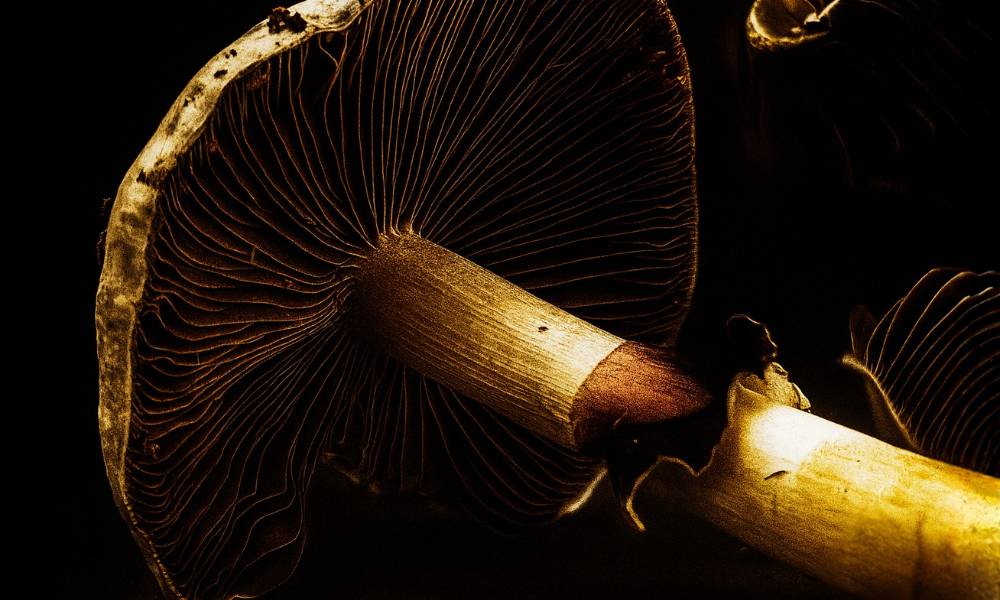
The gills tell Purple Mystic’s real story. Gill attachment ranges from adnate (broadly attached to stem) to adnexed (narrowly attached), matching typical cubensis gill architecture. Fresh young specimens show grayish-purple gills that darken dramatically as spores mature. Fully matured Purple Mystic displays nearly black gills with intense purple undertones—this is where the “Purple” in Purple Mystic becomes unmistakable. Spore prints from mature specimens create stunning displays of purple-black coloration. Under microscopy analysis, individual spores measure 11-17 x 6-9 micrometers with characteristic ellipsoid shapes and distinct germination pores.
Bruising and Oxidation
Like all psilocybin-containing mushrooms, Purple Mystic exhibits distinctive blue bruising when handled, damaged, or simply aging. This blue coloration results from oxidation of psilocin compounds, providing a reliable field indicator (though never definitive proof) of psilocybin presence.
Purple Mystic Spore Characteristics for Microscopy Research
Spore microscopy represents the primary legal application for Purple Mystic research. Many individuals interested in entheogenic research or microscopy often select Purple Mystic for its distinctive spore features. Mushroom taxonomy, genetic identification, and morphological studies all rely on detailed spore analysis—perfectly aligned with “microscopy research only” compliance frameworks.
Spore Morphology Under Microscope
Under 400x-1000x magnification, Purple Mystic spores display classic Psilocybe cubensis morphology: ellipsoid to subellipsoid shape with pronounced germination pores at one end. Technical specifications from Atlas Spores indicate dimensions of 11-17 x 6-9 micrometers for P. cubensis species-wide measurements. Spore wall thickness appears relatively substantial, contributing to the dark purple-brown to nearly black coloration visible in dense spore deposits. Individual spores show translucent purple-brown tones, while concentrated deposits appear opaque dark purple. The germination pore—a critical taxonomic feature—appears as a distinct lighter area at the spore’s apical end under high magnification.
Research Applications
Microscopy students and taxonomy enthusiasts study Purple Mystic spores for multiple educational purposes: distinguishing Psilocybe cubensis from morphologically similar species, understanding spore developmental stages, and practicing microscopy techniques with visually striking specimens. Creating permanent microscopy slides requires proper spore syringe preparation techniques, sterile handling protocols, and appropriate mounting media for long-term slide preservation.
Purple Mystic Growing Characteristics
Here’s where Purple Mystic’s reputation gets interesting. These mushrooms grow best in nutrient-rich, humid environments, which can make cultivation more demanding. Community growers report this variety as more challenging than beginner-friendly options like Golden Teacher or Blue Meanie.
Cultivation Difficulty Level
Reddit communities describe Purple Mystic as “the most difficult I’ve grown” compared to standard cubensis varieties. The primary challenge? Slower colonization times that increase contamination risk windows. Where Golden Teacher colonizes grain spawn in 7-10 days, Purple Mystic often requires 14-21 days for complete colonization. Unlike strains with a fast fruiting nature, Purple Mystic demands more patience due to its slower growth and maturation. That extended timeline means more opportunities for competing organisms—bacteria, molds, and yeasts—to establish themselves in your substrate. For beginners, we recommend starting with faster-colonizing varieties before attempting Purple Mystic. Check out the top 5 mushrooms for beginners for better first-time cultivation candidates.
Environmental Requirements
Despite its challenging reputation, Purple Mystic requires standard Psilocybe cubensis environmental parameters. Cornell University’s mushroom cultivation guidelines establish optimal temperature ranges of 21-27°C during colonization and fruiting phases. It is crucial to monitor both humidity and temperature levels closely to ensure optimal growth. Humidity requirements follow typical specifications: 90-95% relative humidity during fruiting, achieved through frequent misting or automated humidification systems. Fresh air exchange prevents CO2 buildup that causes elongated stems and small caps.
Substrate Preferences
Purple Mystic thrives on standard substrate formulations used throughout cubensis cultivation: CVG (coco coir, vermiculite, gypsum) provides excellent results for bulk fruiting, while milo grain or brown rice flour work well for initial colonization phases. The CVG recipe ratio: 650g coco coir, 2 quarts vermiculite, 1 cup gypsum, mixed with boiling water to field capacity moisture content. This provides ideal water retention, aeration, and nutrition for mycelial colonization.
Purple Mystic vs Other Purple Strains
Purple Mystic isn’t the only Psilocybe cubensis variety featuring “purple” in its name. How does it compare to similar varieties? Purple Mystic vs Blue Meanie (Cubensis): Blue Meanie earned its name from particularly intense blue bruising rather than purple spores. Blue Meanie also colonizes significantly faster, making it more beginner-friendly. Purple Mystic distinguishes itself through darker spore prints and slower, more deliberate growth patterns, and is considered more challenging to cultivate due to its slower growth and sensitivity. Purple Mystic vs Penis Envy: Penis Envy represents a completely different morphological mutation with thick stems, minimal caps, and reduced spore production. Purple Mystic maintains normal cubensis mushroom architecture, making spore collection straightforward for research purposes. The common thread? All these varieties share fundamental P. cubensis genetics, with differences reflecting isolated mutations, community selection, or environmental expression rather than distinct genetic lineages.
Spore Syringe vs Liquid Culture: Best Format for Purple Mystic
Given Purple Mystic’s slower colonization challenges, format selection significantly impacts cultivation success rates. Using sterile techniques and proper storage can encourage better results and reduce contamination risks.
Why Liquid Culture Works Better
Liquid culture versus spore syringes represents a fundamental choice in cultivation methodology. Liquid culture contains actively growing mycelium suspended in nutrient solution, while spore syringes contain dormant spores requiring germination. For slow-colonizing varieties like Purple Mystic, liquid culture provides three major advantages: Speed: Liquid culture colonizes 3-5 times faster than spores because mycelium is already established and actively growing. Contamination resistance: Established mycelium competes more effectively against contaminants than germinating spores. Consistency: Cloned genetics in liquid culture provide predictable results, while spores introduce genetic variability. Browse Purple Mystic spore syringes for microscopy research, or consider liquid culture formats for cultivation projects where legally permissible.
Common Growing Challenges & Solutions
Purple Mystic’s difficulty reputation stems from specific challenges. Here’s how experienced cultivators address them:
Overcoming these challenges can lead to great satisfaction and results for experienced growers.
Slow Colonization Issues
Problem: 21-day colonization times versus 10 days for faster strains. Solutions: Maintain precise temperature control at 24-25°C (optimal for P. cubensis mycelial growth). Use generous inoculation rates—3-5 milliliters per quart jar instead of standard 1-2 milliliters. This accelerates colonization by establishing stronger initial mycelial presence.
Contamination Prevention
Extended colonization windows demand flawless sterile technique. Every additional day provides opportunities for airborne contaminants to establish themselves. Key prevention strategies include: working in still-air boxes or laminar flow hoods, flame-sterilizing all tools between uses, and maintaining meticulous cleanliness throughout cultivation spaces. For guaranteed clean cultures, explore FungusHead’s clean culture guarantee covering contamination-free genetics.
Where to Buy Purple Mystic Spores for Research
Purple Mystic spores remain legally available for microscopy research in most jurisdictions (excluding California, Georgia, and Idaho where spore possession faces restrictions). Reputable vendors provide spore syringes with guaranteed viable spore counts, sterile preparation, and clear microscopy-only labeling. Fast shipping and reliable shipping practices are especially important for customers in the USA, ensuring you receive your spores quickly and securely. Quality indicators include: visible spore suspension density, sterile syringe packaging, and vendor transparency about spore collection methods. When purchasing Purple Mystic genetics, verify vendor reputation through community reviews and cultivation forums. Customers are happy with the spores they receive, often leaving positive reviews expressing their love for the product. Thanks to everyone for your feedback and support. Established vendors maintain consistent quality control and honor contamination guarantees.
Frequently Asked Questions
Is Purple Mystic suitable for beginners?
No—Purple Mystic’s slow colonization and contamination sensitivity make it intermediate to advanced difficulty. Beginners should start with faster-colonizing varieties like Golden Teacher before attempting Purple Mystic cultivation.
What makes the spores “purple”?
The “purple” refers to particularly dark purple-black spore prints characteristic of this variety. All Psilocybe cubensis produce purple-black spores, but Purple Mystic displays especially dark, concentrated coloration that cultivators find visually striking.
How long does Purple Mystic take to colonize?
Expect 14-21 days for complete grain colonization, approximately double the time required for faster cubensis varieties. Bulk substrate colonization adds another 7-14 days before fruiting conditions initiate.
Final Thoughts: Purple Mystic’s Place in Mycology
Purple Mystic occupies an interesting niche in mushroom cultivation culture. It’s not the easiest variety, nor the fastest, nor necessarily the most productive. But those stunning purple-black spore prints and the challenge it presents to experienced cultivators keep Purple Mystic relevant in mycology communities. For microscopy researchers, Purple Mystic spores offer visually striking specimens that demonstrate classic Psilocybe cubensis morphology. The dark spore coloration shows beautifully under magnification, making Purple Mystic an excellent educational specimen. Whether you’re examining spores under 1000x magnification or simply appreciating the biodiversity within Psilocybe cubensis varieties, Purple Mystic reminds us that nature’s variations extend far beyond what we initially see.
Important Disclaimer: This article provides educational information about Psilocybe cubensis taxonomy, spore morphology, and mycology research for microscopy purposes only. We do not condone or promote the cultivation of psilocybin-containing mushrooms. Psilocybin remains a Schedule I controlled substance in the United States and many other jurisdictions. Always consult local laws and regulations before conducting any mycological research involving Psilocybe species. This information is intended for educational and scientific research purposes exclusively.
